 11
11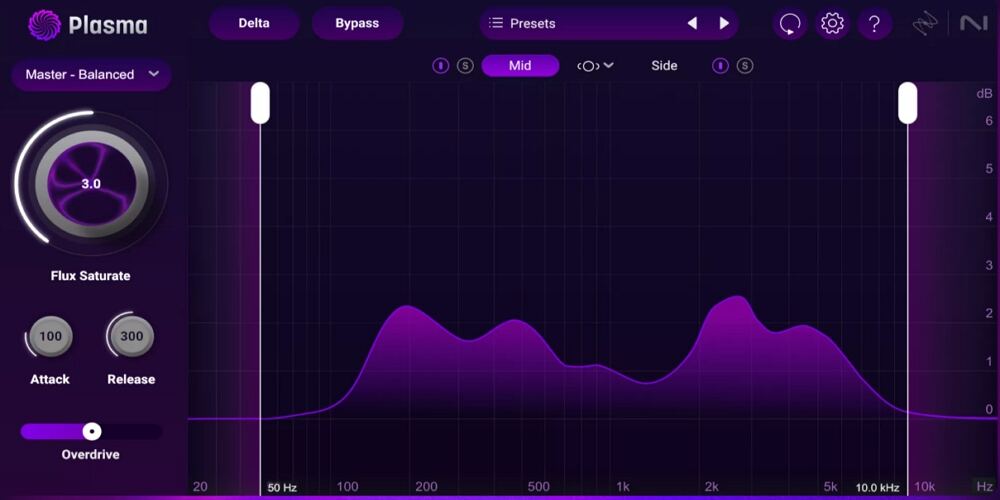
Every popular music recording made before the digital era passed through analog equipment that introduced harmonic distortion, soft-knee compression, and subtle tonal coloration. Tape machines, tube amplifiers, console transformers, and transistor circuits all contributed their own flavors of saturation to the recordings we grew up listening to. When the industry shifted to digital audio workstations, the clinical precision of digital recording delivered transparency, but it also stripped away the warmth and character that decades of listeners had come to associate with professional music.
Saturation plugins exist to bridge that gap. At a technical level, saturation adds overtones (harmonics) to your audio signal and introduces gentle compression through soft clipping. Even-order harmonics (the 2nd, 4th, 6th, and so on) produce a warm, musical quality associated with tube amplifiers. Odd-order harmonics (3rd, 5th, 7th) create a brighter, edgier character associated with transistor circuits and tape distortion. The ratio and intensity of these harmonics determine whether saturation sounds like a subtle analog polish or an aggressive, gritty distortion.
Beyond harmonic generation, saturation increases perceived loudness without raising actual gain levels. It fills out the frequency spectrum, helps instruments cut through a dense mix, and adds cohesion when applied to a bus or master channel. Whether you are working on a polished pop vocal, a punchy drum bus, or an entire master, saturation is one of the most versatile processing tools in your arsenal.
In this guide, we review the 9 best saturation plugins available in 2026, covering premium tools, specialized processors, and a standout free option. Each review includes detailed feature breakdowns, pricing, format compatibility, and practical mixing tips to help you get the most from each plugin.
| # | Plugin | Best For | Price | Standout Feature | Formats |
| 1 | SoundToys Decapitator | Overall versatility | $99 | 5 hardware algorithms | VST/AU/AAX |
| 2 | FabFilter Saturn 2 | Precision & multiband | $149 | 28 distortion styles | VST/AU/AAX/CLAP |
| 3 | XLN Audio RC-20 | Lo-fi & creative | $99 | 6 effect modules | VST3/AU/AAX |
| 4 | Black Box HG-2MS | Mix bus & mastering | Subscription | Dual tube circuits | VST/AAX |
| 5 | Baby Audio TAIP | Tape saturation | $99 | AI tape emulation | VST/AU/AAX |
| 6 | SSL X-Saturator | Natural saturation | $149 | Harmonic blend control | VST/AU/AAX |
| 7 | iZotope Plasma | Beginners | $49 | Adaptive Flux engine | VST3/AU/AAX |
| 8 | Softube Harmonics | Analog authenticity | $99 | Dynamic Transient Ctrl | VST/AU/AAX |
| 9 | Klanghelm IVGI | Budget producers | Free | Pro-grade at zero cost | VST/AU/AAX |
Award: Best Overall Saturation Plugin
Price: $99 (also in SoundToys 5 bundle)
Formats: VST2, VST3, AU, AAX | Mac & Windows
Best For: Vocals, drums, bass, guitars, mix bus
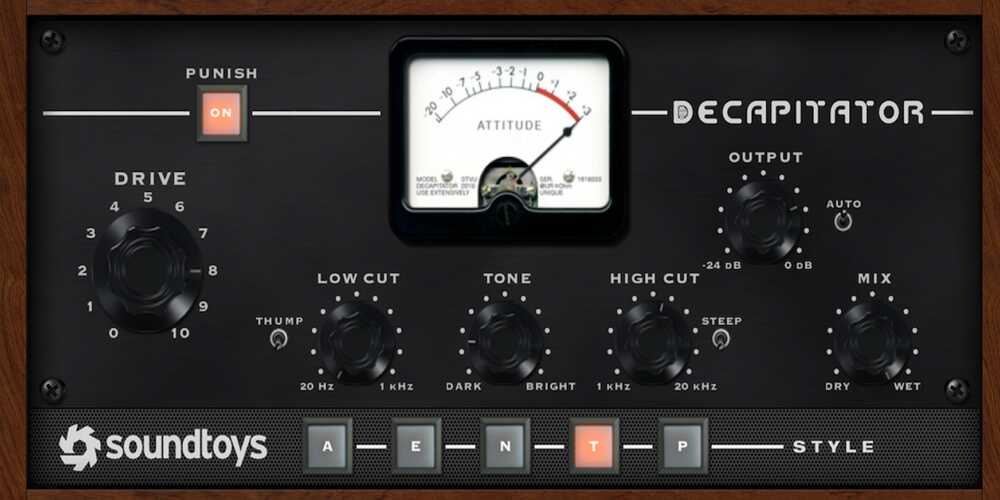
If there is one saturation plugin that has achieved near-universal acclaim among professional engineers, it is SoundToys Decapitator. Named for its ability to clip the peaks of transients, this plugin has remained the go-to harmonic enhancement tool for mixing and sound design across virtually every genre. Its enduring popularity stems from a rare combination of simplicity in workflow and depth in sonic character.
Decapitator is built around five distinct saturation algorithms, each modeled after legendary analog hardware. These range from the warm, tape-driven tonality of an Ampex 350 preamp to the edgy harmonic aggression of a Thermionic Culture Vulture in pentode mode. Each algorithm reacts differently depending on the source material and how hard you drive it, which gives the plugin a genuinely organic and hardware-like feel.
The control layout is refreshingly direct. The Drive knob serves as the primary intensity control, while a Tone knob shapes the post-saturation frequency response with a single sweep. High-cut and low-cut filters allow you to focus the saturation on specific frequency ranges, preventing the low end from becoming muddy or the highs from turning harsh. The Mix control enables parallel processing directly within the plugin, which is essential for maintaining transient clarity on percussive sources while still adding body and warmth.
One of the most useful features is the Auto Output function, which compensates for gain increases caused by the Drive control. This ensures you are making tonal decisions rather than being deceived by louder-equals-better bias. And then there is the Punish button, which adds an additional 20 dB of gain for moments when you want full-throttle destruction.
Use Decapitator with a moderate Drive setting (around 3 to 5) on vocals to add presence and harmonic richness without introducing obvious distortion. For drum buses, try Style E or Style N with the Mix control at around 40 percent to maintain punch while adding analog glue. On bass tracks, push the Drive harder and use the low-cut filter to prevent sub-frequency buildup.
Award: Best for Precision & Multiband Control
Price: $149 (also in FabFilter bundles)
Formats: VST, VST3, AU, AAX, CLAP | Mac & Windows
Best For: Mastering, detailed mixing, sound design
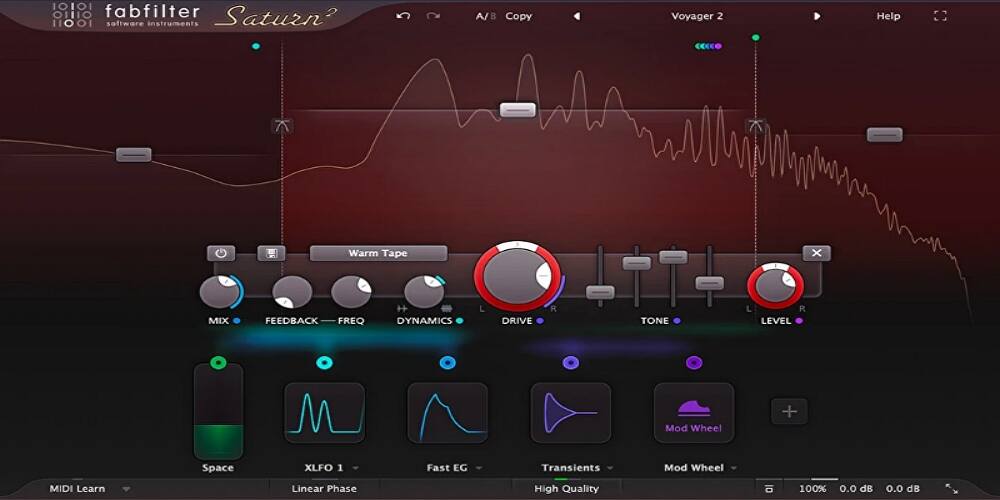
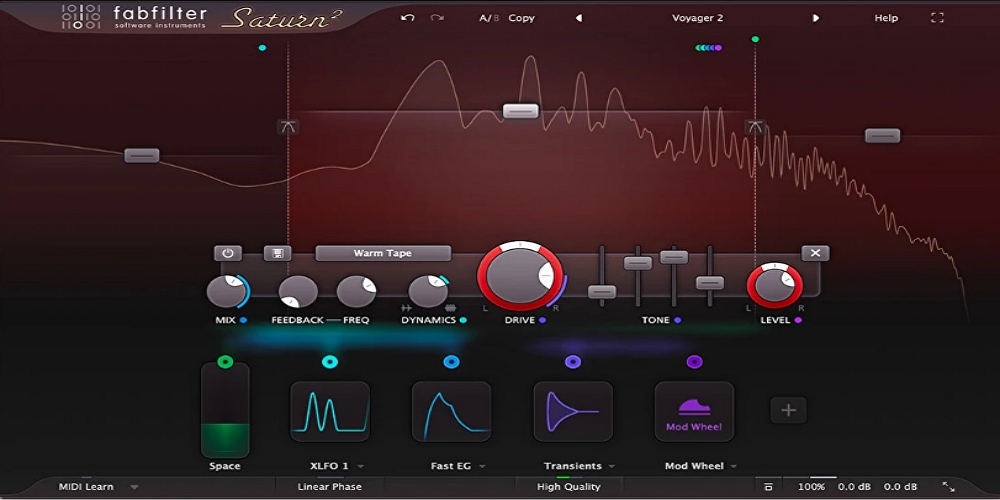
Where Decapitator excels through simplicity and character, FabFilter Saturn 2 takes the opposite approach: maximum precision and flexibility. This is a multiband saturation powerhouse with 28 distinct distortion styles, per-band dynamics, tone shaping, and one of the most powerful modulation engines found in any audio plugin. It is the saturation tool of choice for engineers who demand surgical control over every harmonic detail.
Saturn 2 allows you to split your audio into up to six frequency bands, each with its own independent saturation algorithm, drive amount, dynamics, feedback, and tone controls. This means you can apply warm tube saturation to your low-mids while adding crisp tape-style harmonics to the upper frequencies, all within a single plugin instance. The crossover slopes are adjustable from 6 dB per octave up to 48 dB per octave, and a linear phase processing option ensures phase coherence for mastering applications.
The 28 distortion styles are organized into categories including Subtle (ideal for mastering), Warm (classic tube and tape flavors), and FX (creative waveshaping and bit-crushing). The Subtle styles were introduced specifically for Saturn 2 and represent some of the most transparent, mastering-grade saturation processing available in plugin form.
The modulation engine is where Saturn 2 truly separates itself from the competition. You can assign XLFOs, envelope generators, envelope followers, XY controllers, and MIDI sources to virtually any parameter. All modulation is visualized in real time with color-coded indicators, making complex modulation setups both intuitive and visually informative. This opens the door to everything from subtle movement and animation in your saturation to fully automated, rhythmically synchronized harmonic effects.
For mastering, use the Subtle saturation styles with linear phase enabled and keep the drive at conservative levels (1 to 3 dB). Split your signal into three bands and apply slightly different saturation intensities to each to add density without altering the tonal balance. For creative sound design, try modulating the drive parameter with an envelope follower to create dynamic, input-responsive saturation.
Award: Best for Lo-Fi & Creative Character
Price: $99
Formats: VST3, AU, AAX | Mac & Windows
Best For: Lo-fi production, hip-hop, ambient, creative texture
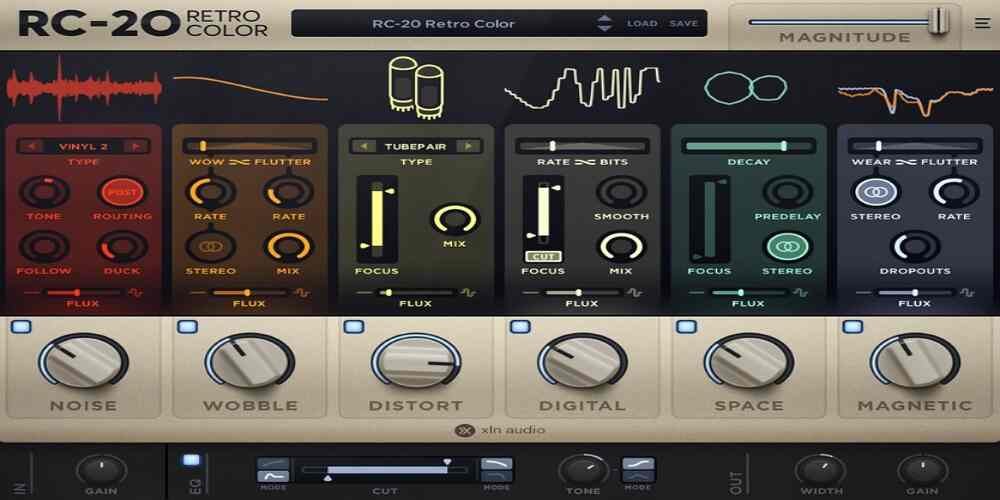
RC-20 Retro Color is not just a saturation plugin. It is a complete multi-effects suite dedicated to the art of analog imperfection. With six independent effect modules, an extensive preset library, and one of the most intuitive interfaces in music production, RC-20 has become the standard tool for producers who want their tracks to sound like they were recorded on vintage hardware.
The six modules address different aspects of analog degradation and coloration. The Noise module adds everything from vinyl crackle to tape hiss, with Follow and Duck controls that let the noise interact dynamically with your audio. Wobble introduces pitch modulation in the form of wow and flutter effects, mimicking the mechanical inconsistencies of tape machines. The Distort module provides six types of saturation and distortion, from gentle tube warmth to aggressive fuzz, with a Focus knob for frequency-specific targeting.
The Digital module handles bit depth and sample rate reduction for crunchy, retro textures. Space adds a simple but effective reverb that integrates well with the other effects. Magnetic simulates tape degradation with random volume dropouts and subtle flutter.
Each module can be independently bypassed, and the order is fixed but the interaction between modules creates a surprisingly diverse sonic palette. The global controls include input and output gain, a tone section with low, mid, and high frequency bias, and a width control for stereo field manipulation. The preset library is organized by category and is genuinely inspiring, covering everything from subtle warmth to full-blown vintage destruction.
For a classic lo-fi hip-hop sound, activate the Noise module with subtle vinyl crackle, add light Wobble for tape flutter, and use the Distort module with a warm tube setting at low Drive. For more experimental textures, try the Magnetic module with high Dropout values combined with the Digital module at reduced bit depth. The combination creates unpredictable, evolving textural effects that work beautifully on ambient pads and background layers.
Award: Best for Mix Bus & Mastering Duties
Price: Plugin Alliance subscription or individual purchase
Formats: VST2, VST3, AAX | Mac & Windows
Best For: Mix bus, mastering, drum bus, vocal polish
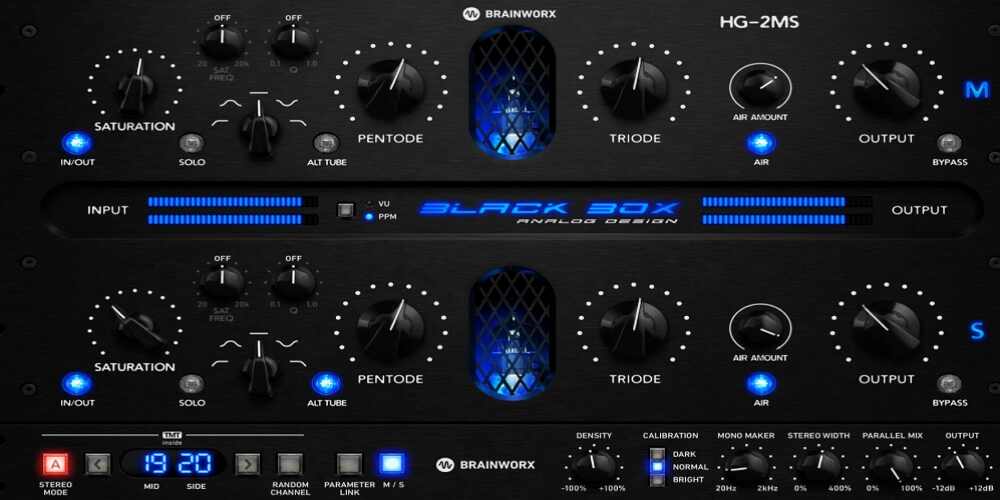
The Black Box Analog Design HG-2MS is the plugin version of a boutique hardware tube saturator that retails for several thousand dollars. Designed primarily for mix bus and mastering applications, it delivers dual-stage tube saturation with the kind of weight and three-dimensional depth that is difficult to achieve with most software processors.
The HG-2MS features two distinct tube circuits operating in series. The Pentode circuit produces smooth, rich even-order harmonics that add warmth and body. The Triode circuit generates edgier, odd-order harmonics that bring presence and aggression. The real power lies in blending these two circuits, dialing in the exact ratio of warmth to bite your material requires.
Three saturation modes further shape the tonal character. Flat applies saturation evenly across the frequency spectrum. Low emphasizes the low end, adding weight and punch to drums and bass-heavy material. High focuses on the upper frequencies, adding air and sparkle without harshness. The Air circuit provides a high-frequency shelf boost, bringing dull material back to life.
The MS (mid-side) version enables processing the mid and side channels independently, which is invaluable for mastering. You can add weight and density to the center of the mix while applying different saturation characteristics to the stereo field. This level of control allows for subtle but highly effective enhancement of stereo width and imaging.
For mix bus applications, start with very low Pentode and Triode settings and gradually increase until you feel the mix gaining density and warmth without obvious coloration. Use the Air circuit sparingly to add top-end presence. For mastering, the Low saturation mode can add significant perceived weight to a mix without boosting the actual low-frequency level, making it particularly useful for genres that rely on powerful bass.
Award: Best Tape Saturation Plugin
Price: $99 (frequently discounted)
Formats: VST, VST3, AU, AAX | Mac & Windows
Best For: Tape warmth, mix bus glue, drums, vocals
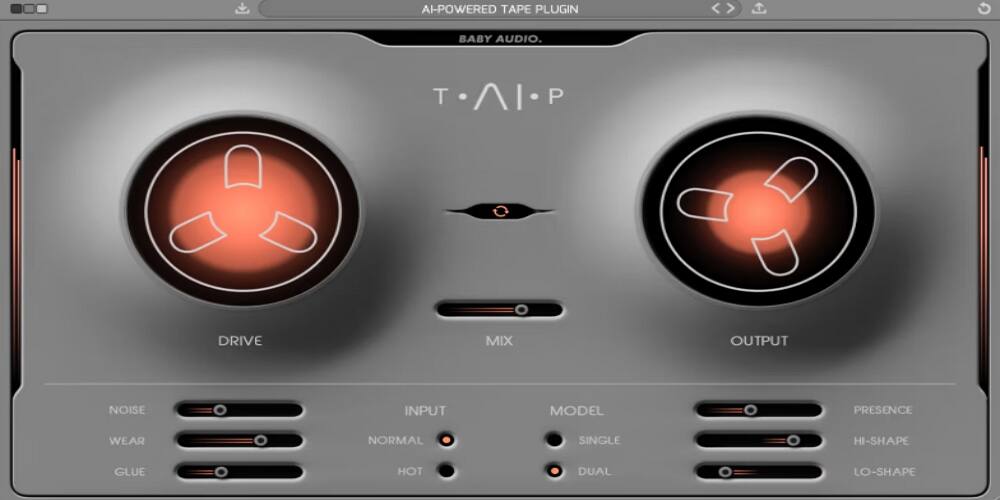
Baby Audio has established itself as one of the most innovative plugin developers of recent years, and TAIP represents their approach to tape emulation through a novel lens: artificial intelligence. Rather than relying on traditional DSP to model specific tape machine components, TAIP uses neural networks trained on the actual behavior of a vintage 1970s reel-to-reel machine. The result is a tape emulation that captures the nonlinear, unpredictable qualities of analog tape with striking authenticity.
The interface is clean and purpose-driven. The Drive knob serves as the primary saturation control, with a generous range that goes from barely perceptible warming to aggressive, overdriven distortion. An Auto Gain function maintains consistent output levels as you increase Drive, which is essential for making honest tonal comparisons. The Mix control enables parallel processing for more subtle applications.
Six additional parameters expand the sonic palette. Noise adds authentic tape hiss, Wear introduces wow, flutter, and altered frequency response to simulate degraded tape stock, and Glue replicates the natural compression behavior that tape machines exhibit due to their limited dynamic range. On the tonal side, Presence adjusts the high-frequency response, while Hi-Shape and Lo-Shape controls bias the saturation toward specific frequency ranges.
Input mode offers Normal and Hot options (the latter adding more harmonic intensity), and the Model switch toggles between Single and Dual tape machine configurations. Dual mode runs the signal through two emulated tape stages in series, producing a thicker, more saturated sound.
With 135 presets created by Grammy-winning engineers and producers, TAIP provides excellent starting points for any application. The plugin has been praised across professional publications for its musicality, ease of use, and value relative to competing tape emulation tools.
On the mix bus, use TAIP with moderate Drive (around 3 to 5), a touch of Glue for compression, and Presence slightly boosted to compensate for any high-frequency loss. For drums, try the Dual model with higher Drive settings to add aggressive body and impact. Combining the Wear and Mix parameters at roughly 50 percent creates a convincing tape flanging effect that works beautifully on guitars and synths.
Award: Best for Natural, Mix-Friendly Saturation
Price: $149 (also in SSL Complete subscription)
Formats: VST2, VST3, AU, AAX | Mac & Windows
Best For: Vocals, drum bus, guitars, mix bus
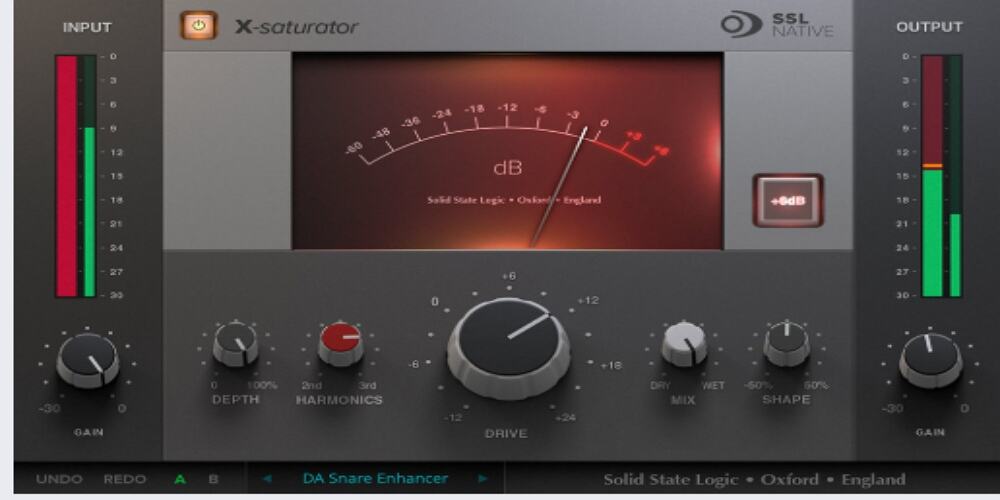
Solid State Logic has been at the center of professional audio engineering for decades, and their Native X-Saturator brings that heritage to the plugin world. This is a saturation tool designed to be musical and transparent, adding harmonic richness that enhances your mix without demanding attention. For engineers who prefer a utility-first approach to saturation, the X-Saturator delivers.
The X-Saturator provides two types of harmonic distortion: even-order harmonics that emulate valve (tube) circuits, and odd-order harmonics that replicate transistor-style clipping. The Harmonics control blends between these two types, letting you dial in anything from warm, smooth tube saturation to harder, more aggressive solid-state character. This single-knob harmonic blend is an elegant design choice that makes finding the right tone fast and intuitive.
The Shape control adjusts the distortion curve from soft and rounded to hard and angular. Combined with the Drive control, this creates a wide range of saturation intensities. At low Drive and soft Shape settings, the effect is almost imperceptible, adding just a hint of harmonic content and subtle compression. At higher settings, the saturation becomes more pronounced and aggressive, suitable for creative effects or heavily driven sound design.
The Wet/Dry control makes parallel processing straightforward, allowing you to blend the saturated signal with the original for optimal transient preservation. A selection of presets provides quick starting points, and the overall CPU footprint is modest, making it practical to use across multiple tracks in a session.
On vocals, set the Harmonics control toward the even-order side for warmth, use moderate Drive, and blend with the Dry/Wet at around 30 to 50 percent. For drum buses, lean the Harmonics toward odd-order for more bite and snap. The X-Saturator also works well on acoustic instruments when you want to add subtle body without altering the recording’s essential character.
Award: Best Saturation Plugin for Beginners
Price: $49
Formats: VST3, AU, AAX | Mac & Windows
Best For: Beginners, vocals, full mixes, quick workflow
iZotope Plasma represents a newer approach to saturation that prioritizes intelligence and accessibility. Using what iZotope calls Flux Saturation technology, Plasma dynamically adapts its processing based on the incoming audio, applying saturation precisely where it adds the most musical value. This makes it an ideal choice for producers who are newer to mixing and want reliable, professional-sounding results without extensive parameter tweaking.
Plasma analyzes the spectral content of your audio and applies saturation dynamically rather than statically. This means it responds to the energy and frequency distribution of your signal in real time, producing results that feel more natural and context-appropriate than a fixed saturation curve. The practical benefit is that you can achieve polished, radio-ready warmth with minimal effort.
The interface provides separate controls for high, mid, and low frequency ranges, allowing you to shape the saturation across the spectrum without needing multiband routing or additional plugins. Mid/Side processing is available for stereo width manipulation, and transient processing controls let you selectively saturate the attack or sustain portions of your signal. This transient feature is particularly useful on drums, where you can add bite to the attack while smoothing the sustain, or vice versa.
Targeted profiles optimize the processing for specific instrument types and full mixes, further reducing the learning curve. Attack and release controls add a dynamic element that goes beyond what most saturation plugins offer, blurring the line between saturation and compression in a musically useful way.
For vocals, select the vocal profile and increase the overall Drive gradually until the vocal thickens and pushes forward in the mix without sounding distorted. On the mix bus, use very conservative settings with the mix profile active. Plasma is particularly effective for adding perceived loudness and warmth to full mixes that sound clean but lifeless.
Award: Best for Authentic Analog Sound
Price: $99 (also in Softube subscriptions)
Formats: VST, VST3, AU, AAX | Mac & Windows
Best For: Drums, bass, vocals, mix bus
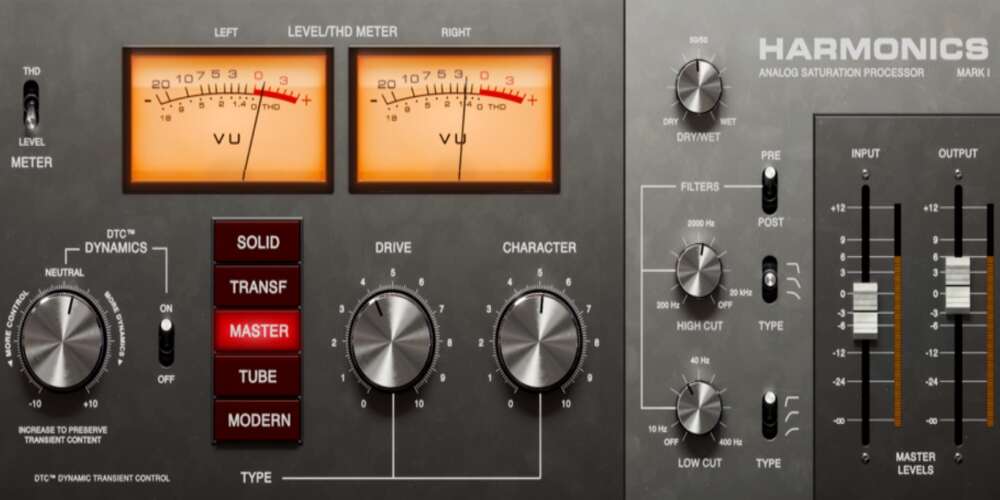
Softube has built a reputation on creating some of the most accurate analog hardware emulations in the plugin industry, and Harmonics continues that tradition. This saturation plugin offers five distinct hardware-inspired distortion modes, each delivering a specific flavor of analog character with the kind of sonic authenticity that Softube is known for.
The five modes are descriptively named to indicate their origin and character. Solid emulates the punch and clarity of 1970s solid-state circuitry. Transformer captures the low-end weight and subtle coloration of American console transformers. Master provides gentle, transparent saturation suitable for mastering applications. Tube delivers the warm compression and harmonic richness of boutique valve circuits. Modern offers the more aggressive character of an English all-valve triode design.
Each mode responds differently to input level and drive settings, and the differences between them are not just tonal but dynamic. Tube mode, for example, introduces noticeable soft-knee compression that helps glue elements together, while Solid mode preserves transients more faithfully and adds harmonic content without significantly affecting dynamics.
The Dynamic Transient Control is a standout feature that functions similarly to a wet/dry mix control but specifically targets transients. This allows you to saturate the body and sustain of your audio while mixing the original transients back in, which is exceptionally useful for drum processing. You can add substantial harmonic density to a drum bus without sacrificing the initial impact of each hit.
For bass guitar, Transformer mode adds significant low-end weight that helps the bass translate on smaller speakers. On snare drums, try Modern mode with the Dynamic Transient Control to add aggressive harmonic content while preserving the crack of the attack. For mix bus duties, Master mode with conservative settings provides a subtle analog polish that makes everything sound slightly more cohesive and three-dimensional.
Award: Best Free Saturation Plugin
Price: Free
Formats: VST, VST3, AU, AAX | Mac & Windows
Best For: Budget-conscious producers, everyday mixing, subtle warmth
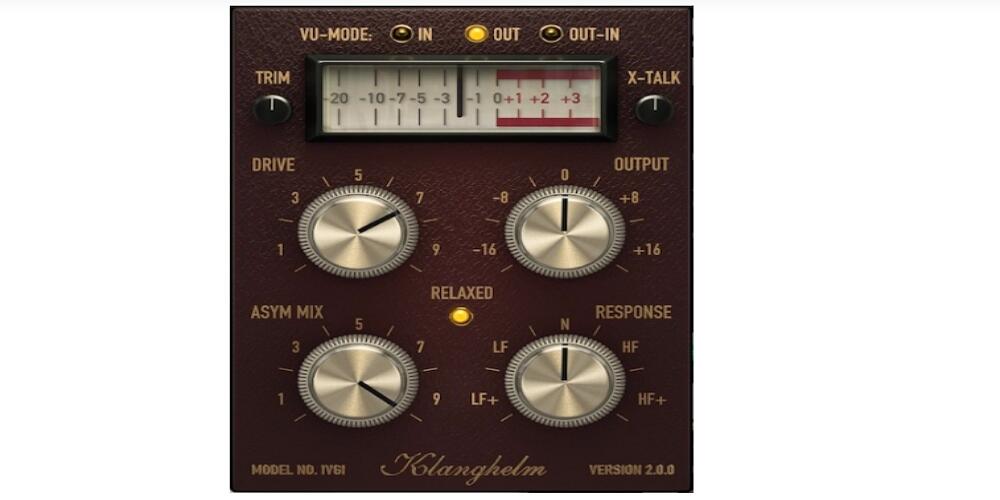
In a market dominated by premium-priced plugins, Klanghelm IVGI stands as proof that exceptional saturation does not require a financial investment. This free plugin delivers smooth, musical harmonic enhancement that many engineers consider competitive with paid alternatives costing ten times as much. For anyone building a plugin collection on a budget, IVGI should be one of the first tools you install.
IVGI provides a straightforward set of controls that belie the quality of the processing underneath. The Drive knob introduces harmonic distortion that scales gracefully from barely noticeable warmth to clearly audible saturation. The character of the distortion is smooth and musical throughout the range, avoiding the harsh, digital artifacts that plague many free (and even some paid) saturation tools.
The Asym Mix control adjusts the balance between symmetric and asymmetric distortion, which in practical terms controls the amount of compression behavior introduced by the saturation. At lower values, the compression is more pronounced, adding glue and cohesion. At higher values, the saturation is more transparent and less dynamically intrusive. The Response knob introduces a shelf filter to the harmonics, allowing you to bias the saturation toward the low end or high end.
A Trim control at the top of the interface adjusts the input level, with 0 VU being the optimal operating point. The X-Talk control introduces crosstalk between the left and right channels, which can add subtle stereo interest but should be used carefully on stereo material. The VU meter can be switched between input, RMS, and output views.
Despite being free, IVGI is built with the same care and attention to audio quality as paid plugins from the same developer. Klanghelm also offers SDRR, a paid plugin with four saturation modes, for those who want to expand their options from the same developer.
IVGI excels as an everyday saturation tool across your entire session. Place it on individual tracks with conservative Drive settings to add subtle warmth and presence. On vocals, it adds a pleasing thickness that helps them sit in the mix. On the drum bus, increase the Drive and lower the Asym Mix for more compression and glue. Because it is free and CPU-efficient, there is no reason not to experiment with it on every track.
Selecting the right saturation plugin depends on your specific production needs, workflow preferences, and budget. Here are the key factors to consider when making your decision.
Some plugins prioritize simplicity, offering a handful of well-designed controls that produce musical results quickly. Decapitator, TAIP, and IVGI fall into this category. Others, like Saturn 2, provide deep control over every parameter but require more time to learn. Consider whether you value speed and simplicity or precise control and flexibility.
Different plugins specialize in different types of saturation. Tube saturation (warm, smooth) is best for vocals and mix bus applications. Tape saturation (cohesive, slightly compressed) excels on drums and full mixes. Transformer and solid-state saturation (punchy, present) works well on bass and individual instruments. Decide which type you need most frequently and prioritize accordingly.
Broadband saturation processes the entire frequency spectrum uniformly, which is simpler but less precise. Multiband saturation, as offered by Saturn 2, lets you target specific frequency ranges independently. Multiband processing is particularly valuable for mastering, where you need to add warmth to the low end without affecting the clarity of the high frequencies.
Saturation plugins range from completely free to several hundred dollars. IVGI by Klanghelm proves that exceptional quality is available at no cost. Premium plugins like Saturn 2 and the HG-2MS justify their price through advanced features and sonic depth. Many developers offer free trials, and subscription models like Plugin Alliance and SSL provide access to premium tools at lower upfront costs.
Saturation is the process of adding harmonic distortion and gentle compression to an audio signal. It originates from the behavior of analog hardware when driven beyond its normal operating range. Tape machines, tube amplifiers, and transistor circuits each produce distinct harmonic signatures that add warmth, presence, and perceived loudness to recordings.
Saturation is a controlled, musical form of distortion that typically operates at subtle to moderate intensity levels. Traditional distortion is more aggressive and dramatically alters the waveform. In practice, saturation adds richness and warmth while preserving the original character of the sound, whereas distortion intentionally degrades and reshapes it.
Saturation is effective on virtually any element. Common applications include individual vocal tracks (for warmth and presence), drum buses (for punch and cohesion), bass (to add harmonics that improve translation on small speakers), and the mix bus (for subtle analog-style glue). It can also be used creatively on synths, guitars, and effects returns.
The general principle is that if you can clearly hear the saturation as an effect in the full mix, you have likely applied too much. Effective saturation typically operates at subtle levels, where you notice its absence when bypassed rather than its presence when active. A good starting point is 1 to 3 dB of drive with a wet/dry blend of 30 to 60 percent.
Yes, and many professional engineers do. A common approach is to use different saturation types at different stages of the signal chain. For example, tube saturation on individual tracks, tape saturation on the drum bus, and a transparent clipper on the mix bus. The key is moderation at each stage, as cumulative saturation can quickly become excessive.
Absolutely. Klanghelm IVGI, Softube Saturation Knob, and several Analog Obsession plugins demonstrate that free tools can deliver professional-grade results. Free plugins are also excellent for experimentation and learning how different types of saturation affect your audio before investing in premium options.
Saturation remains one of the most impactful processing tools available to modern music producers and engineers. Whether you are adding a subtle touch of analog warmth to a vocal, gluing a drum bus together with tape-style compression, or transforming a synth into something entirely new through aggressive harmonic distortion, the right saturation plugin can elevate your mixes from clinical and flat to vibrant and professional.
The nine plugins reviewed in this guide represent the best options available in 2026, spanning the full range of price points, workflows, and sonic philosophies. SoundToys Decapitator remains the most versatile all-around choice. FabFilter Saturn 2 provides unmatched precision for advanced users. RC-20 Retro Color is the definitive creative texture tool. Baby Audio TAIP offers the most convincing AI-powered tape emulation. And Klanghelm IVGI proves that world-class saturation can cost nothing at all.
The best approach is to take advantage of free trials wherever available, test each plugin on your own material, and let your ears decide which tools deserve a permanent place in your workflow. Saturation is a deeply personal choice because its effect is ultimately about the character and identity of your sound.
Other buyer guides: