 11
11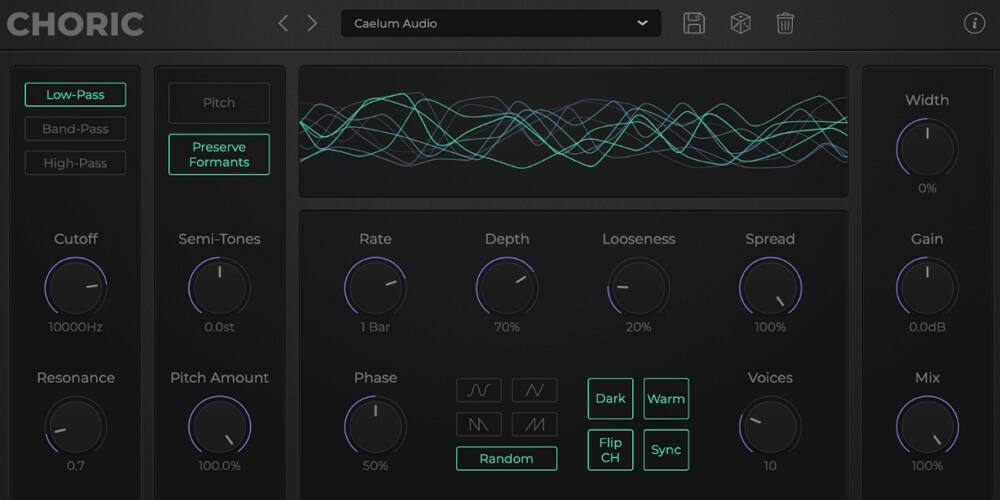
Chorus is the oldest trick in the modulation playbook and remains one of the most powerful. At its core, a chorus processor duplicates your audio, shifts the copy slightly in time and pitch using a low-frequency oscillator, and blends it back with the original. The human ear interprets these micro-variations as multiple sources playing simultaneously—the same principle that makes a choir sound massive compared to a solo voice. The result is spectral density (thickness) and spatial width (stereo spread) from a single source.
But not all the best chorus plugins approach this job the same way. The market in 2026 spans three fundamentally different technologies. Bucket-brigade device (BBD) emulations model the analog circuits of the 1970s and 1980s, where the signal passed through chains of capacitors, losing high-frequency clarity at each stage and gaining warmth, noise, and saturation in return. Digital algorithmic choruses use precise delay and phase manipulation for clean, transparent widening. Pitch-shifting wideners like Soundtoys MicroShift skip the LFO entirely and use fixed detuning for stable, non-modulating stereo expansion. Understanding which category you need is the first step toward choosing the right plugin.
This guide analyzes 12 chorus plugins across all three categories. Each review covers what the plugin does differently, where it excels in a real mix context, and where it falls short. At the end, you will find a decision framework, signal chain placement strategies, and practical mix tips that none of the competing guides cover. The goal is not just to list plugins but to help you build a complete chorus toolkit that covers every scenario you will face in production and mixing.
Also read: best sampling plugins of 2026.
Best for Transparent Stereo Polish
Price: ~$99 (or FX Collection bundle) | Formats: AU, VST3, AAX | macOS 11+, Windows 10+
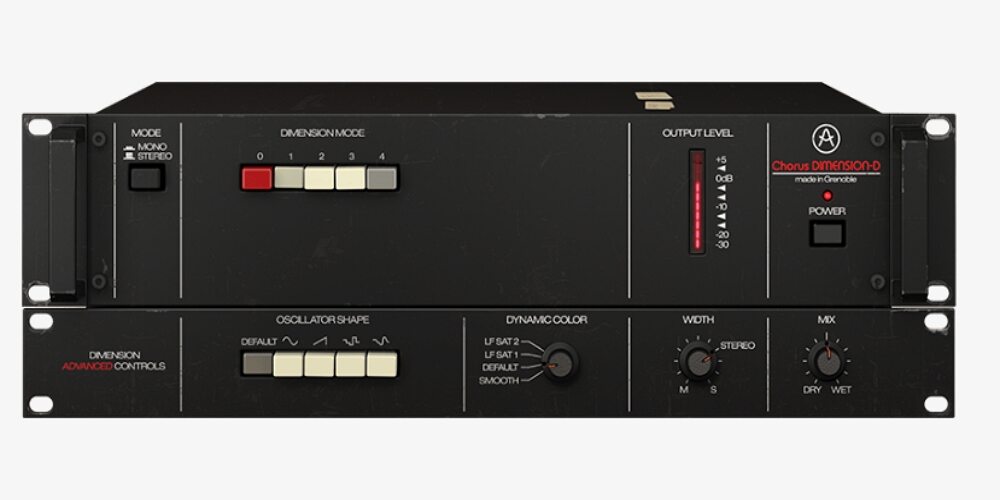
The Roland Dimension D is the studio rack unit responsible for that invisible, expensive width you hear on records from Stevie Wonder to Tears for Fears. Arturia’s software recreation is the closest anyone has come to bottling that specific magic: stereo expansion that feels motionless. There is no audible wobble, no pitch warble, no seasickness. Sounds simply grow wider and more three-dimensional, as if the walls of the room suddenly moved apart.
The interface stays faithful to the original four-button system. Mode 1 delivers the gentlest widening, ideal for lead vocals that need to sit just a touch wider without losing center focus. Mode 2 and Mode 3 each ratchet up the intensity progressively. Mode 4 engages the maximum stereo spread, perfect for synth pads that need to envelop the listener. Pressing multiple buttons simultaneously unlocks hybrid textures that the original hardware also supported, giving you additional shading options without a single extra knob.
Where Arturia earns its keep is the expanded control set hidden behind the simple facade. Five selectable LFO shapes let you swap the modulation character from smooth sine waves to stepped patterns. A dedicated Stereo Width control adjusts the crossmix between left and right delay lines, giving you finer resolution than the four-button system alone. The BBD modeling captures the gentle compression, saturation, and high-frequency rolloff of the original’s bucket-brigade circuit, meaning even at subtle settings, the plugin adds a layer of analog warmth.
The Dimension-D is the plugin you reach for when you want chorus that nobody notices. It does not scream “effect.” It simply makes your mix feel more expensive. Drop it on backing vocals, acoustic guitars, or electric piano and the track graduates from bedroom demo to studio release.
Best for Cinematic Depth and 80s Power
Price: ~$99 (frequently on sale for ~$29) | Formats: VST, AU, AAX | macOS, Windows
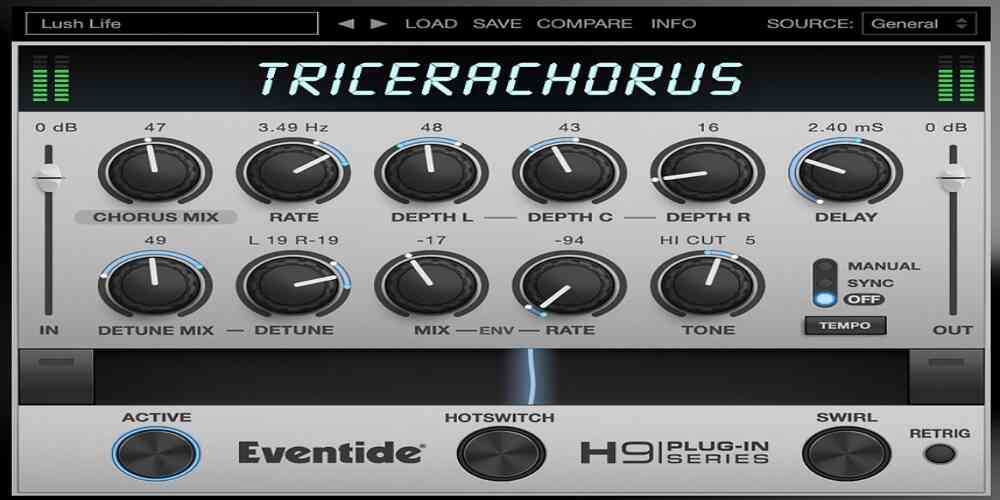
If the Dimension-D is the invisible hand, TriceraChorus is the declaration. Eventide built this plugin around the legendary Tri-Stereo Chorus architecture that defined the sound of session guitarists like Steve Lukather and Michael Landau in the 1980s. Three independent chorus voices—Left, Center, and Right—each driven by a three-phase LFO, create a stereo image so wide and so thick that sources feel like they have been tripled in size.
The three chorus modes give you distinct flavors of movement. Chorus mode delivers a classic stompbox-style effect with warm, familiar pitch modulation. Vibrato mode strips away the dry signal entirely for a pure pitch-warping shimmer. Chorale mode is where the plugin truly differentiates itself, emulating the expensive rack-mounted tri-chorus units that cost thousands of dollars in the 1980s. The result is a deep, lush, cinematic wash that works beautifully on pads, strings, and ambient guitar textures.
Eventide’s proprietary MicroPitch detuning technology layers on top of the chorus engine, subtly spreading the pitch of left and right channels apart by a few cents. This creates an extra dimension of width that feels stable and musical rather than wobbly. The Swirl switch adds flanging, phasing, and Univibe-style effects simultaneously, pushing the plugin into psychedelic territory that no other chorus on this list can match.
The Ribbon controller—an Eventide signature—lets you morph between two completely different parameter states in real time, making TriceraChorus a powerful performance tool for producers who automate their effects. Map the Ribbon to a MIDI controller and sweep from a subtle shimmer in the verse to a massive, detuned wash in the chorus section of your song. For sheer range and emotional impact, TriceraChorus sits in a class by itself.
Best for Modern Precision and Multi-Band Control
Price: ~$49 | Formats: AAX, AU, VST2/3 | macOS 10.11+, Windows 10+
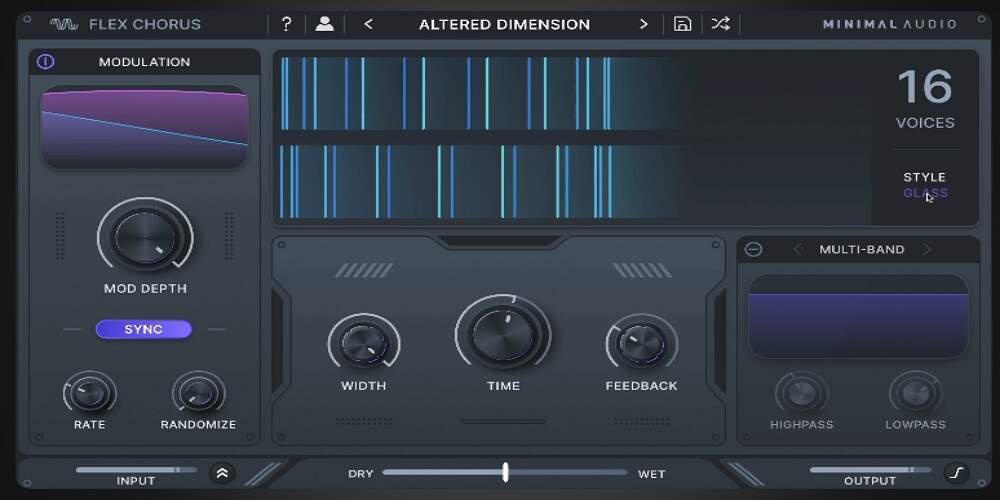
Flex Chorus represents the new school of chorus design: clean, precise, and fully frequency-aware. While vintage emulations add character through noise and harmonic distortion, Flex Chorus adds character through sheer spatial control. Its dual-algorithm system gives you two fundamentally different modulation engines. Smooth mode uses psychoacoustic processing for a warm, analog-inspired chorus that wraps around sounds naturally. Glass mode employs a multi-stage stereo spread for a brighter, more crystalline shimmer that works beautifully on modern pop and EDM productions.
The headline feature is the multi-band filtering section, and it changes how you think about chorus entirely. Instead of applying modulation across the entire frequency spectrum—which inevitably makes bass content feel unstable and muddy—Flex Chorus lets you isolate exactly where the effect lives. Keep your sub-bass and kick drum frequencies completely dry while pushing rich stereo movement through the mids and highs. This single capability solves the biggest practical problem with chorus in dense mixes: low-end smearing.
Stacking anywhere from 2 to 24 voices creates a spectrum of effects, from gentle doubling at 2 voices to a massive ensemble wash at 24. A real-time stereo visualization shows how voices move across the stereo field, making it easy to see when your width is balanced or lopsided. The built-in limiter offers two styles: Purple mode for gentle saturation and transparent blending, and Orange mode for punchy compression that pushes the chorus forward aggressively.
Flex Chorus is the plugin for producers who want surgical control without sacrificing musicality. It bridges the gap between creative effect and mix utility, and at its price point, it significantly undercuts competitors that offer less flexibility.
Best for Authentic Vintage Pedal Tone
Price: ~$149 (frequently discounted) | Formats: VST, AU, AAX | macOS, Windows
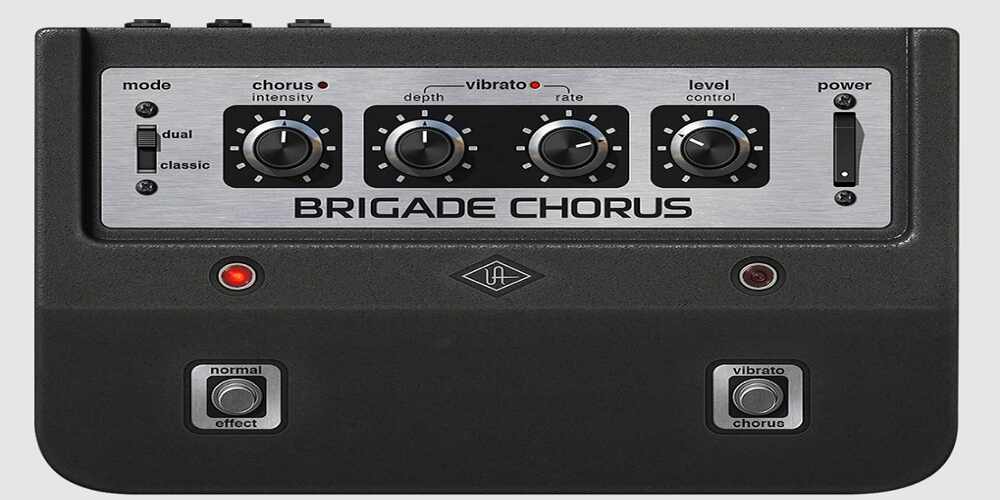
The Boss CE-1 Chorus Ensemble pedal from 1976 launched an entire generation of guitarists into the world of modulation. Universal Audio’s Brigade Chorus captures that specific analog DNA: the thick, gooey bucket-brigade delay circuit that gradually degrades the signal in the most musical way possible. High frequencies soften. The modulation feels organic and slightly unpredictable. There is a physical warmth to the sound that digital algorithms struggle to replicate.
Brigade offers two operation modes that fundamentally change its behavior. Classic mode mirrors the original CE-1’s mono/stereo routing, where the left channel stays dry and the right channel receives the processed signal. This creates a natural width that works particularly well for guitar tracking, where you want the direct tone anchored on one side with the chorus swimming on the other. Dual mode treats both channels independently, simulating two CE-1 pedals running in parallel for a massive, immersive stereo chorus.
The Vibrato section goes beyond simple chorus into deep pitch-bending territory. At gentle settings, it adds a subtle detuning that thickens vocals and synths without sounding processed. Cranked up, it delivers a seasick, tape-degradation wobble that lo-fi and experimental producers will love. The simplicity of the interface—mirroring the original hardware’s knob layout—means you spend less time tweaking and more time playing.
Brigade Chorus is not the most flexible plugin on this list. It does one thing: it sounds like a real analog pedal running through a real signal chain. For producers chasing that specific vintage guitar tone, or anyone who wants to add organic analog movement to synths, vocals, or even drum overheads, there is nothing else quite like it.
Best for Creative Sound Design and Massive Layering
Price: ~$49 | Formats: AAX, AU, VST | macOS 10.13+, Windows 7+
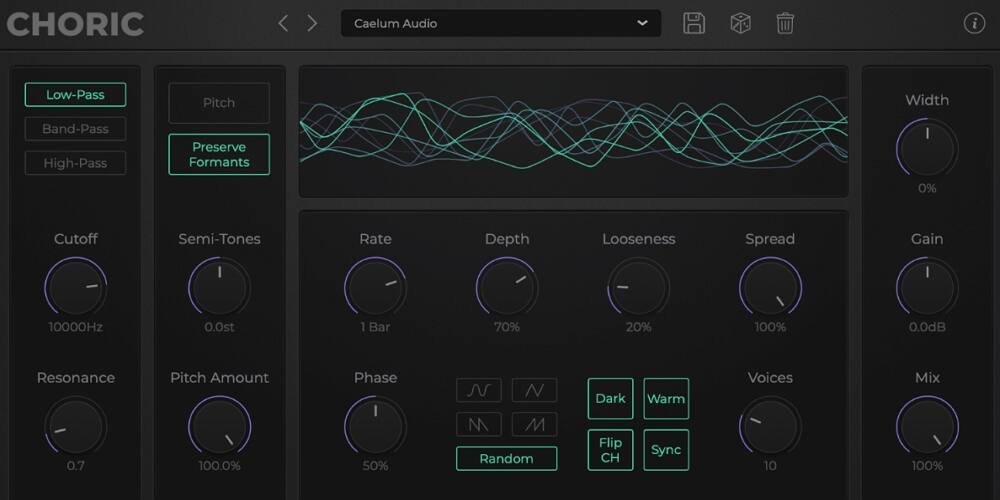
Choric takes the concept of chorus and stretches it to its logical extreme. While most chorus plugins offer 2 to 4 voices, Choric lets you stack up to 32 independent modulation layers. At higher voice counts, the effect transcends traditional chorus territory entirely and enters ensemble, unison, and even reverb-like textural space. It is as much a sound design tool as it is a mixing effect.
The Looseness knob is a standout parameter that competitors lack. It introduces slight timing offsets between voices, simulating the natural imperfections of a real ensemble. Without it, high voice counts can sound artificially uniform. With it engaged, the effect breathes and moves in a way that feels organic rather than digital. Combined with Rate, Phase, and Depth controls, you can sculpt movement that ranges from a barely perceptible shimmer to a massive, swirling wall of modulation.
The pitch section elevates Choric further. Full octave pitch shifting with formant preservation means you can create harmonized chorus textures without the chipmunk artifacts that plague basic pitch shifters. The filtering section—offering low-pass, band-pass, and high-pass modes—lets you isolate the chorus to specific frequency ranges. The Warm mode adds 3.5dB of analog-style saturation, while Dark mode rolls off highs for a vintage character.
Stereo control is equally impressive: Spread, Width, and a Flip CH button that inverts modulation in one channel for asymmetric movement. Choric is the plugin you reach for when you want to transform a single, static sound source into something massive, evolving, and three-dimensional. It ships with 50 presets that cover classic to experimental territory.
Best for Synth Bass and Analog Precision
Price: ~$59 | Formats: VST, AU, AAX | macOS, Windows
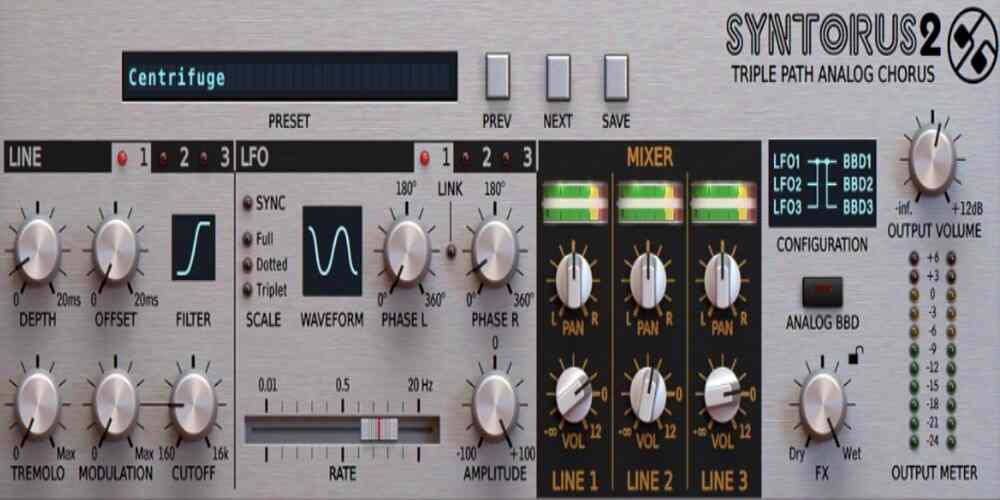
D16 Group built their reputation on obsessive analog modeling of vintage drum machines and synthesizers, and Syntorus 2 applies that same engineering rigor to the chorus effect. Rather than emulating a single hardware unit, Syntorus 2 provides three independent BBD delay lines that can be configured in various routing topologies. This makes it the most architecturally flexible analog chorus emulation available.
The plugin excels in a specific role that most competitors struggle with: adding movement to bass frequencies without destroying the sub-bass foundation. The highly sophisticated filter section lets you precisely control which frequency ranges receive modulation, and the LFO phase sync locks modulation to your project tempo. This means bass chorus that feels rhythmic and intentional rather than loose and smeary—a critical distinction in genres like techno, acid house, and industrial where bass texture is paramount.
Each of the three delay lines features independent LFO controls with adjustable clock noise and BBD characteristics, letting you dial in the exact amount of analog grit. Low clock rates simulate the noisy, warm degradation of vintage chips running at their limits. High clock rates deliver cleaner, more precise modulation. This level of control rewards experimentation but demands a learning investment.
The interface is dense and rack-mount styled, with many knobs and signal flow routing options. Syntorus 2 is not an instant-gratification plugin. It is a sound designer’s sandbox that reveals its depth over time. For producers who want to sculpt analog chorus textures at the component level, nothing else competes at this price point.
Best for Instant 80s Character
Price: ~$99 (or FX Collection bundle) | Formats: AU, VST, AAX, NKS | macOS 11+, Windows 10+
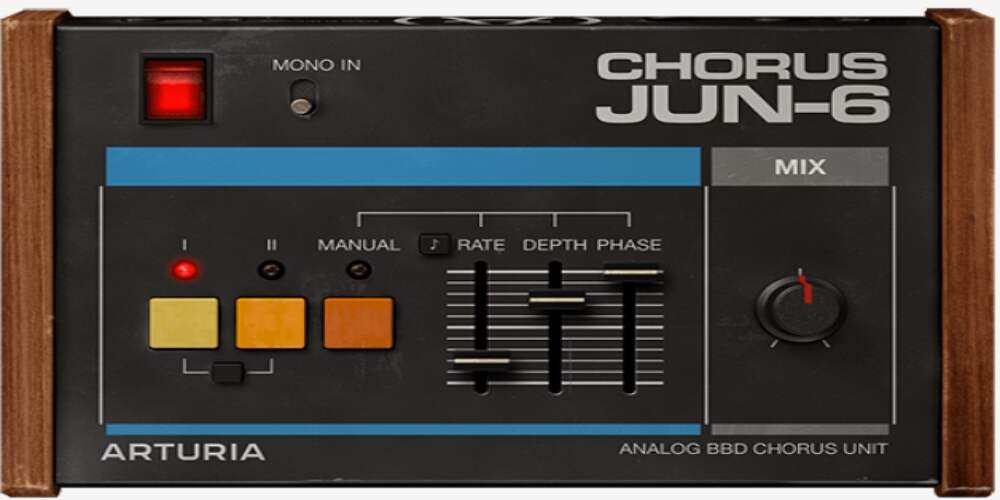
The Roland Juno-60 is one of the most important synthesizers in the history of pop music, and its legendary status owes more to its onboard chorus than to its oscillators. The raw DCO sound of a Juno-60 is surprisingly thin and static. Engage the chorus, and it transforms into the lush, warm, swirling pad sound that defined an entire decade. Arturia’s Chorus JUN-6 extracts that specific magic and delivers it as a standalone effect.
The classic three-button interface is faithfully recreated. Mode I offers a slow, shallow modulation that adds gentle stereo width without noticeable pitch variation—the default setting for pads and strings. Mode II increases rate and depth for a richer, more animated movement that works well on leads and melodic basslines. Pressing both buttons simultaneously (I+II) engages a mono summing mode with a rapid, almost tremolo-like modulation that sounds aggressive and churning, perfect for organ textures and experimental leads.
The Manual mode is where the plugin transcends the hardware. Direct access to LFO Rate, Depth, and Phase controls lets you sync the modulation to your track’s tempo—something impossible on the original unit. The BBD modeling captures the noise floor, subtle saturation, and high-frequency rolloff of the real circuit, meaning the plugin imparts a specific coloration that is warm, dark, and immediately recognizable.
The JUN-6 is a character piece. It does not do transparency or subtlety the way the Dimension-D does. It stamps a thick, warm analog blanket over everything it touches, which is exactly what synthwave, indie pop, and lo-fi producers want. If your mix needs to sound like 1985, this is the fastest path there.
Best for Vocal Width and Professional Sheen
Price: ~$149 (frequently on sale for ~$49) | Formats: VST, AU, AAX | macOS, Windows
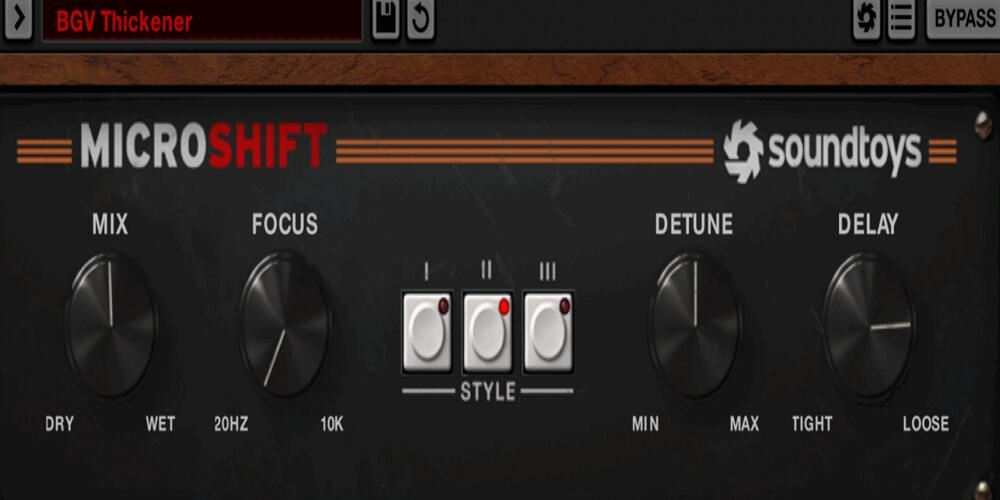
MicroShift operates differently from every other plugin on this list. Technically, it is a pitch-shifting stereo widener rather than a traditional LFO-based chorus. But functionally, it delivers a chorusing effect that has become the industry standard for professional vocal production. It duplicates the signal, pans the copies hard left and right, and detunes them by a fixed amount—typically a few cents in each direction—while adding a tiny delay offset.
The result is a stable, consistent width that avoids the pitch warble of traditional chorus entirely. There is no seasickness, no swimming, no audible modulation. Vocals simply sound wider, thicker, and more produced. This is the plugin responsible for the “expensive” vocal sound you hear on modern pop, R&B, and hip-hop records. It allows lead vocals to sit on top of a dense mix without competing for space.
Three styles model different hardware algorithms. Style I recreates a preset from the Eventide H3000, delivering the classic stereo widening sound. Style II uses a different delay algorithm for a slightly altered spatial texture. Style III models the AMS DMX 15-80s, producing a wider delay variation with more harmonic saturation that works exceptionally well on guitars. The Focus knob acts as a crossover filter, applying the widening effect only to high frequencies while keeping low-mids mono and punchy—essential for maintaining bass clarity in dense arrangements.
MicroShift is less of a creative modulation effect and more of a mix utility. It does not swirl or evolve. What it does is make sources sound bigger and more professional with almost zero effort. For vocal production specifically, it is the closest thing to a universal “make it sound better” button that exists in audio processing.
Best for Classic Tri-Stereo Shimmer
Price: ~$79 | Formats: AU, VST3, AAX | macOS 10.15+, Windows 10+
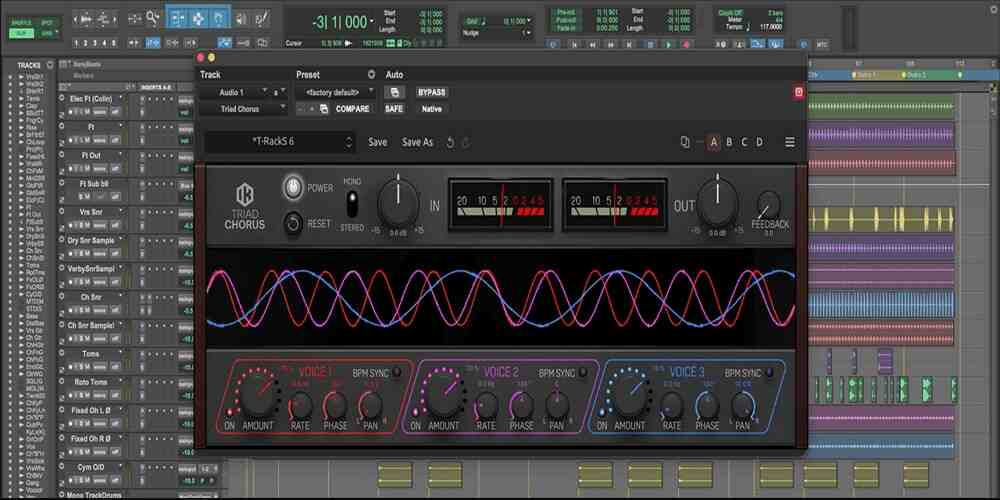
Triad Chorus draws from the same Tri-Stereo Chorus lineage as TriceraChorus, but with a different design philosophy. Where Eventide layers on MicroPitch detuning and psychedelic Swirl effects, IK Multimedia focuses on delivering three pristine, independently controllable chorus voices with modern studio integration. Each voice offers its own Rate, Amount, Phase, Pan, and BPM sync controls, giving you granular command over exactly how the stereo image is constructed.
In stereo mode, the routing is elegant: the left input feeds Voice 1, the right input feeds Voice 3, and a mono sum is sent to Voice 2. This creates a natural, balanced width that avoids the hollow center problem that plagues some tri-chorus designs. The Feedback control loops the processed signal back into itself, producing evolving, resonant textures that can range from subtle complexity to full metallic resonance depending on how far you push it.
BPM sync across all three voices keeps modulation locked to your project tempo, which is critical for rhythmic material where free-running chorus can create unwanted flamming or timing ambiguity. The digital expansion mode extends the effect beyond what the original 1980s hardware could achieve, adding a modern polish that works in contemporary production contexts.
Triad Chorus occupies the middle ground between the vintage character of Brigade Chorus and the modern precision of Flex Chorus. It delivers classic tri-stereo shimmer with enough modern control to integrate cleanly into any production workflow.
Best for Versatile Modern Workflows
Price: ~$49 | Formats: VST, AU, AAX | macOS, Windows
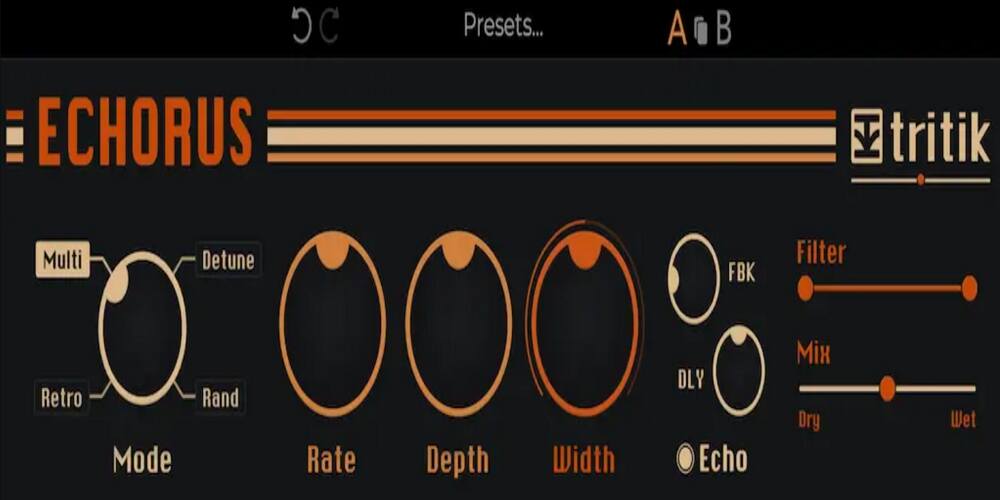
Echorus sits at the intersection of vintage character and modern utility. Rather than modeling a specific piece of hardware, Tritik designed it to capture the spirit of analog chorus pedals while offering the workflow benefits of clean digital software. Four distinct algorithms give you a broader range of modulation textures than any single-hardware emulation can provide.
Retro mode delivers a warm, familiar two-voice chorus. Multi mode engages four delay lines per channel for a dense, rich ensemble texture. Detune mode uses pitch shifting rather than LFO modulation, similar to MicroShift’s approach, making it useful for widening without wobble. Random mode is the standout: it uses random-walk generators to modulate the delay lines, creating an evolving, non-repetitive texture that avoids the predictable swoosh of sine-wave LFOs. This makes it sound more organic and less mechanical than traditional chorus.
The integrated Echo section adds pre-delay and feedback capabilities, transforming the chorus into a short modulated delay. This is exceptionally useful for plucked synths, arpeggios, and guitars that benefit from both spatial width and rhythmic depth in a single effect. The high-pass filter on the input lets you chorus the mids and highs while leaving bass frequencies untouched.
A resizable interface with dark mode rounds out the workflow features. Echorus does not carry the brand recognition of Arturia or Eventide, but it earns its place through sheer versatility and musical quality. It is the plugin for producers who want one chorus that handles every situation competently rather than owning five plugins that each handle one situation perfectly.
Best Free Chorus Plugin
Price: FREE | Formats: VST, AU, AAX | macOS, Windows, Linux
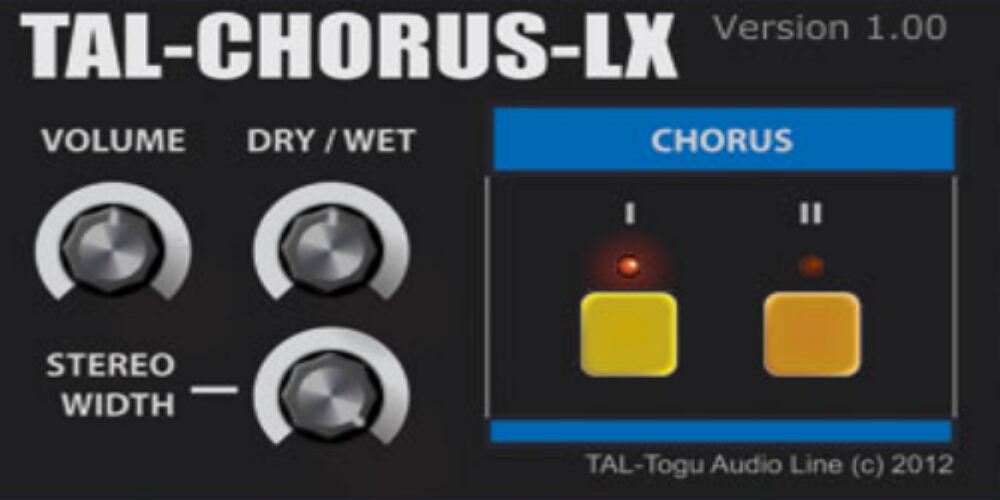
TAL-Chorus-LX is extracted from Togu Audio Line’s acclaimed TAL-U-NO-LX synthesizer, and it delivers the Juno-60 chorus sound at zero cost. Audio comparisons consistently show it tracking close to the original hardware, reproducing the warm, dark, slightly noisy modulation character that makes the Juno chorus so distinctive. For a free plugin competing against options costing $100+, this is remarkable.
The interface is minimal: two mode buttons (I and II), a Stereo Width knob, and a Dry/Wet blend. Mode I provides mild, pleasant stereo separation. Mode II delivers richer, deeper modulation. Engaging both buttons creates maximum intensity with a chaotic, wobbly character. The Stereo Width knob adds functionality the original hardware lacked, letting you narrow the effect to mono if you only want the pitch modulation character without stereo information.
The Dry/Wet knob is essential for using the plugin as an insert effect. Blending in just 20–30% wet signal thickens a mono synth without washing it out, turning a harsh digital sawtooth wave into a warm, professional-sounding pad. The plugin is lightweight enough to run dozens of instances without significant CPU impact.
TAL-Chorus-LX is the plugin every producer should install regardless of budget. It handles the “Juno sound” with enough authenticity that many working producers use it in preference to paid alternatives. The only limitation is its specificity: it does warm, dark, analog chorus and nothing else. For transparent widening or modern precision, you will need a different tool.
Best for Evolving Ensemble Textures
Price: ~$29 | Formats: VST, AU, AAX | macOS 10.9+, Windows 8.1+, Linux
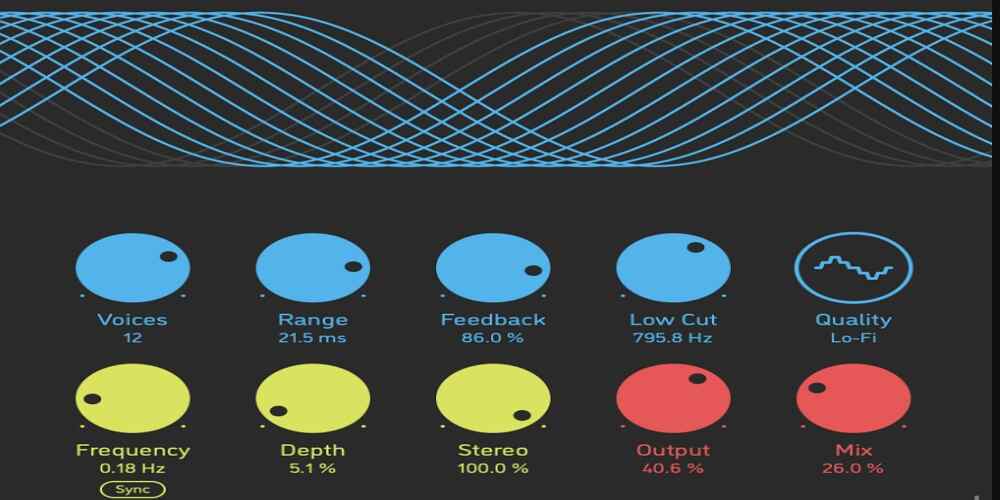
Blend takes a layered approach to chorus that sets it apart from both vintage emulations and modern multi-voice designs. Up to 16 independent chorus layers—each with its own modulation generator and feedback loop—can be stacked while maintaining proportionally balanced phase offsets. The result is an ultra-smooth ensemble effect that never becomes muddy or phasey, even at maximum layer count.
Three selectable interpolation algorithms subtly change the texture of the chorus. One delivers warmer, more vintage-style modulation; another produces a cleaner, more modern character; the third sits between the two. This level of tonal control from a simple algorithm selector is unusual and gives Blend a wider sonic range than its minimal interface suggests.
The built-in high-pass filter removes low frequencies from the input before processing, preventing phase issues in the bass range. Each layer’s independent feedback loop means the plugin can morph from a standard chorus into ensemble, flanger, vibrato, tape-wow, or even reverb-like territory depending on your settings. The lag filters on all parameters ensure click-free adjustments during real-time tweaking or automation.
Blend is a sleeper pick. Its clean, color-coded interface is deceptively simple, hiding a multi-layered architecture underneath. At its price point, it delivers textures that compete with plugins costing three to four times as much. It is particularly effective on pads, strings, and ambient textures where evolving, dimensional movement matters more than a specific vintage character.
Rather than recommending a single “best” plugin, this framework helps you match chorus type to mixing scenario. Build a toolkit with one plugin from each category, and you will be covered for virtually any production situation.
The source should sound wider without any audible modulation. Nothing should sound “effected.” This is the territory of the Arturia DIMENSION-D and Soundtoys MicroShift. Choose the DIMENSION-D when you want analog warmth baked into the widening. Choose MicroShift when you want clinical precision and stable pitch, especially on lead vocals. Both excel on backing vocals, acoustic guitars, electric pianos, and string sections.
The source should sound like it was recorded through a real analog chorus pedal or rack unit. The modulation should be audible, warm, and slightly imperfect. UA Brigade Chorus, Arturia JUN-6, and TAL-Chorus-LX all live here. Brigade delivers the CE-1 pedal sound specifically. JUN-6 delivers the Juno-60 sound specifically. TAL-Chorus-LX delivers the Juno sound for free. Choose based on which hardware character you are chasing and your budget.
The source should feel massive, three-dimensional, and emotionally powerful. Eventide TriceraChorus and Caelum Audio Choric are the tools. TriceraChorus delivers the tri-chorus sound with MicroPitch detuning and performance controls. Choric stacks up to 32 layers for unison-style ensemble textures. TriceraChorus is better for guitars and pads that need theatrical width. Choric is better for sound design and experimental layering.
Bass clarity matters. The chorus needs to operate only in specific frequency ranges without smearing the low end. Minimal Audio Flex Chorus is the clear choice with its multi-band filtering. D16 Syntorus 2 also handles this well with its sophisticated filter section and tempo-synced LFOs, particularly for bass-heavy genres.
Budget is limited, and you need a single versatile chorus. Tritik Echorus covers the most ground with four distinct algorithms (vintage, ensemble, detuning, and random modulation), an integrated echo section, and clean filtering. Sinevibes Blend is the budget alternative at around $29 with morphing capabilities that range from chorus to ensemble to flanger territory.
How you route your chorus matters as much as which plugin you choose. These strategies apply to every chorus on this list.
This is the professional default. Set up your chorus on a return track at 100% wet with no dry signal. Send individual tracks to this return using send knobs. This approach keeps the original signal completely intact, lets you apply EQ and compression after the chorus, and allows multiple tracks to share the same chorus for mix cohesion. Place a high-pass filter before the chorus on the return to prevent bass frequencies from entering the effect chain. A cutoff between 200–400 Hz works for most material.
Static chorus settings throughout an entire song waste the effect’s potential. Automate the send level or the depth parameter to increase during chorus sections, bridges, and emotional peaks. A subtle 3–6 dB send increase during the chorus section of a pop song can make the entire arrangement feel like it opens up without any other changes to the mix.
Place a chorus plugin before a short plate or hall reverb on a return track. The chorus modulates the signal feeding the reverb, creating a shimmering, evolving tail that sounds more three-dimensional than reverb alone. Keep the chorus subtle—Mode 1 on a Dimension-D style plugin or a low wet mix on Flex Chorus. This technique works beautifully on vocals, pads, and clean guitars, and it is the secret behind many “expensive-sounding” ambient textures.
Every chorus plugin creates stereo information by introducing phase differences between left and right channels. When summed to mono—which happens on phone speakers, Bluetooth devices, and club systems—these phase differences can cause partial cancellation, making the chorused signal thinner or quieter than the dry original. Always check your chorus in mono before committing. If the source disappears or thins noticeably, reduce the depth or width parameter until the mono fold-down is acceptable.
Use two different chorus types in series for a more complex stereo image. For example, a subtle Dimension-D style widener for foundational stereo spread, followed by a light touch of MicroShift for high-frequency sheen. The first chorus handles spatial width; the second adds harmonic richness. Keep both conservative—the combined effect is stronger than either alone. This technique is common in professional vocal chains for major-label pop productions.
A chorus plugin duplicates your audio signal, delays the copy by 10–30 milliseconds, modulates the copy’s pitch using a low-frequency oscillator (LFO), and blends it back with the original. The slight pitch and timing differences create the perception of multiple sources playing simultaneously, adding thickness and stereo width to a single track.
For most mixing scenarios, use chorus as a send effect on an auxiliary return track set to 100% wet. This preserves the dry signal, gives you independent control over the effect level, and lets multiple tracks share the same chorus. Use chorus as an insert only when you want the effect baked into a specific sound—for example, on a synth patch where the chorus is part of the instrument’s character rather than a mix enhancement.
Yes. Chorus works by introducing phase differences between the dry and wet signals. When the mix is summed to mono, these differences can cause partial cancellation, making the chorused track thinner or quieter. Always check your chorus settings in mono. If the track loses energy in mono, reduce the depth or width parameter. Using chorus in parallel on a send makes this easier to manage because you can pull back the send level without changing the dry signal.
Traditional chorus uses LFO modulation to continuously vary the pitch and timing of the delayed copy, creating an audible movement or shimmer. Stereo wideners like Soundtoys MicroShift use fixed pitch detuning without ongoing modulation, creating stable width without the wobble. Both achieve stereo expansion, but chorus sounds animated and alive while wideners sound static and controlled. Choose chorus when you want movement; choose a widener when you want invisible width.
A well-rounded toolkit includes three: one transparent widener for invisible stereo enhancement (DIMENSION-D or MicroShift), one character chorus for vintage warmth and modulation (JUN-6, Brigade, or TAL-Chorus-LX), and one precision tool for frequency-aware processing in dense mixes (Flex Chorus or Syntorus 2). This covers 95% of real-world mixing and production scenarios. Adding a creative tool like Choric or TriceraChorus rounds out the kit for sound design and cinematic work.
Yes. TAL-Chorus-LX captures the Juno-60 chorus sound with enough fidelity that many working professionals use it as their default Juno-style chorus. It handles pad thickening, synth widening, and lo-fi textures convincingly. Where it falls short is versatility—it does one sound, and it cannot do transparent widening or multi-band precision. Install it regardless, and add paid plugins when you need capabilities it does not offer.
Chorus is not a single tool with a single job. It is a family of effects that spans transparent utility, vintage character, creative sound design, and cinematic scale. The best chorus plugin for your work depends entirely on what you need it to accomplish in a specific mixing context.
For effortless stereo polish that nobody notices, Arturia Chorus DIMENSION-D remains the gold standard. For raw 80s analog character, Arturia JUN-6 and the free TAL-Chorus-LX deliver the Juno sound at opposite ends of the price spectrum. For massive cinematic depth, Eventide TriceraChorus and Caelum Audio Choric each offer scale that simpler plugins cannot match. For modern precision in dense mixes, Minimal Audio Flex Chorus solves the bass-smearing problem that has plagued chorus effects since their invention. And for professional vocal width, Soundtoys MicroShift is the industry standard for a reason.
Build your toolkit across these categories, process in parallel, automate between sections, and check your mono compatibility. The difference between a mix that sounds flat and one that sounds wide, deep, and alive often comes down to a single well-chosen chorus plugin placed in the right spot in the signal chain.