 11
11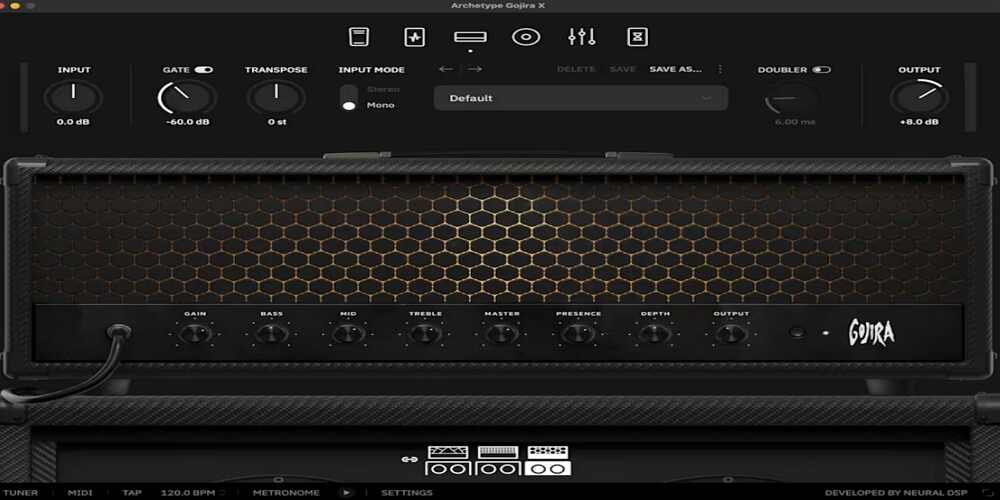
The best guitar amp plugins in 2026 are not the same ones that dominated a year ago. Three seismic shifts hit the market almost simultaneously: Fractal Audio brought its legendary Axe-Fx algorithms into plugin form for the first time, Universal Audio launched a standalone amp suite that needs zero proprietary hardware, and a free open-source project called Neural Amp Modeler started producing captures that rival anything you can buy. The gap between a plugin and a real amplifier has never been thinner.
This guide cuts through the noise. After testing over twenty amp simulators across recording sessions, live rehearsals, and late-night headphone jams, these are the seven guitar amp plugins that earned a permanent spot in our workflow — plus a practical breakdown of the technology behind them so you can pick the right one without second-guessing.
Also Read: Best Chorus Plugins
| Plugin | Best For | Price | Approach | Format |
| Neural DSP Gojira X | Modern Metal | $99 | Neural Modeling | VST/AU/AAX |
| IK Multimedia TONEX | Tone Captures | $99–$250 | AI Capture | VST/AU/AAX |
| Line 6 Helix Native | All-in-One Suite | $99–$399 | Circuit Modeling | VST/AU/AAX |
| Fractal ICONS: Fullerton | Classic Fender Tones | $99–$299 | Circuit Modeling | VST/AU/AAX |
| UA Paradise Guitar Studio | Vintage Tone Chasers | $199 | Circuit Modeling | VST/AU/AAX |
| Positive Grid BIAS X | AI Tone Creation | $149 | Neural + AI | VST/AU/AAX |
| Neural Amp Modeler (NAM) | Free High-Quality Sim | Free | Neural Capture | VST/AU |
Before diving into individual plugins, understanding the three competing technologies will save you from buying the wrong tool for your workflow. This is the single most important decision most articles skip.
Circuit modeling (Helix Native, Fractal ICONS, Softube Amp Room) mathematically simulates every electronic component inside an amplifier — tubes, resistors, capacitors, transformers. Every knob responds authentically because the software is solving the same physics equations as the real circuit. The upside is full interactivity and the ability to discover tones that do not exist on any recording. The downside is that each amp takes months of engineering to model accurately.
Capture/profiling technology (TONEX, NAM, Kemper) plays test signals through a real amplifier, records the output, and trains an algorithm to reproduce that exact behavior. The results are extremely accurate snapshots of a specific amp at specific settings. The limitation is that these captures are frozen — if you turn the gain knob inside the plugin after capture, you are hearing an approximation, not the authentic circuit interaction you would get from a modeler.
Neural network modeling (Neural DSP’s proprietary TINA system, BIAS X’s AI engine) uses deep learning trained on thousands of data points captured from real amplifiers across their full parameter range. This produces plugins with full knob control that still feel organic and responsive. It is the most computationally expensive approach but arguably delivers the best combination of accuracy and flexibility.
The practical takeaway: capture-based plugins excel when you already know the tone you want and need to replicate it. Circuit-modeled and neural plugins excel when you want to explore, tweak, and discover. Many working producers use both — a TONEX capture for the core rhythm tone, surrounded by circuit-modeled effects and routing from Helix or AmpliTube.
If you write anything from djent to progressive death metal, Gojira X is the plugin that makes you want to keep playing instead of tweaking. Developed with Joe Duplantier, it ships with three amplifiers — Clean, Crunch, and Lead — each paired with a matched cabinet that can be swapped freely. The Crunch amp alone covers an absurd range, from tight palm-muted chugs to dual-rectifier-style saturation, while the Lead amp delivers the kind of harmonic-rich sustain that practically plays solos for you.
What separates Gojira X from the crowded Neural DSP lineup is its pedalboard. The whammy and octaver effects track with startling accuracy, enabling the pitch-shifted riffs and harmonic layering that define modern metal production. The plugin’s dynamic response is the real showstopper — it reacts to pick attack, string gauge, and volume-knob rolls with a sensitivity that feels closer to a cranked tube amp than any plugin has a right to.
Why it beats the competition: Tones that sit in a dense mix with almost zero post-processing. Multiple forum users on SevenString.org report getting their final guitar sound directly from presets with only minor EQ adjustments. That mix-ready quality is the reason Gojira X remains the default recommendation for metal production in every serious community we surveyed.
Who should skip it: Players chasing vintage cleans, Fender sparkle, or country twang. Gojira X can do passable clean tones, but that is not what it was built for. Runs on macOS and Windows in VST, AU, and AAX formats with a standalone mode.
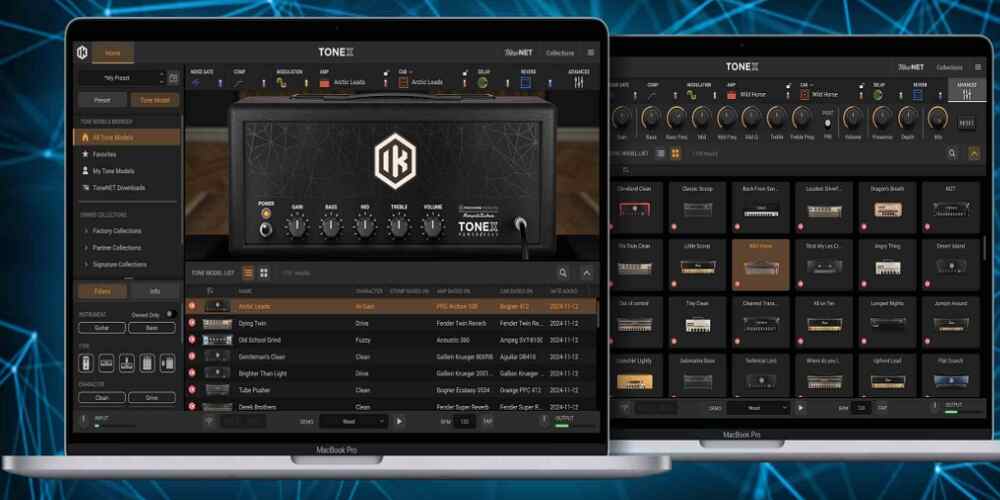
TONEX flipped the amp sim market on its head by letting you capture any real amplifier, cabinet, or pedal and turn it into a playable plugin. The August 2025 update made this even more practical, delivering up to 87% faster AI capture training on modern GPUs — a full rig capture now completes in roughly two minutes. Phase-perfect stereo captures and dramatically improved high-gain accuracy addressed the two biggest complaints from earlier versions.
The real power of TONEX is its ecosystem. ToneNet, IK’s online library, hosts thousands of community-created tone models covering everything from unobtainable vintage Dumble amplifiers to hyper-specific modern rigs. In March 2026, IK released the TONEX ONE Double Special Limited Edition, which ships with captures of six Dumble Overdrive Special amplifiers collectively valued at over $300,000. You can audition those tones with preloaded audio files before even picking up your guitar.
Why it beats the competition: Value. TONEX MAX regularly drops to $97–$99 during sales, and the free TONEX CS version includes 20 premium tone models plus access to 20 community models. Multiple Gearspace and KVR Audio users report abandoning their entire Neural DSP collections after switching to TONEX. The integration with AmpliTube 5 means you can drop captures into fully modeled signal chains with pedals, routing, and effects.
Who should skip it: Players who want maximum knob tweakability from a single amp. Captures are snapshots — post-capture EQ adjustments are approximations, not true circuit interactions. If you love dialing in tones from scratch, a circuit modeler like Helix Native will feel more natural.
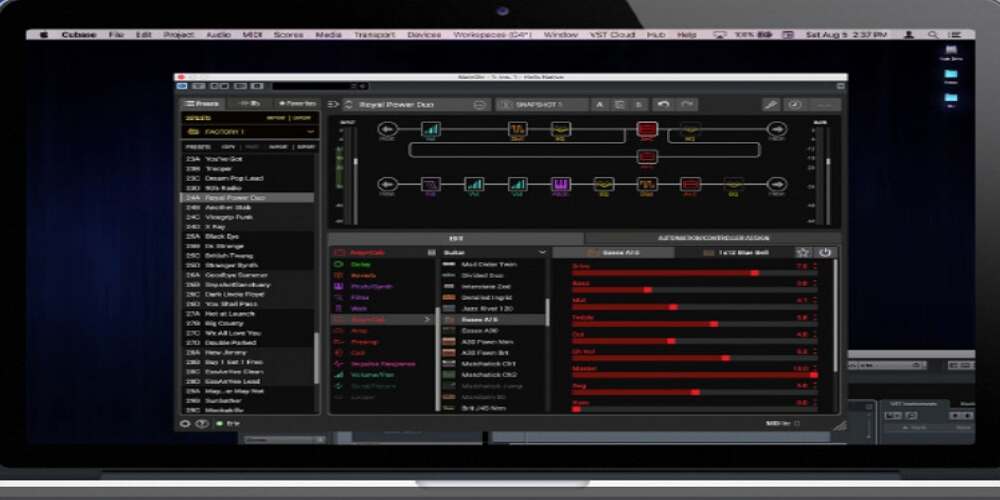
If you only buy one guitar amp plugin, Helix Native is the safest bet. With over 110 amp models and 270+ effects as of firmware 3.80, it is the Swiss Army knife of the plugin world. The 2025 update added the long-requested EVH 5150III model alongside new Fender Super Reverb and Bogner Ecstasy 101B emulations — and every firmware update is free for existing owners, a policy that has held since launch.
The signal routing flexibility is where Helix Native separates from artist-signature plugins. You can run dual amps in parallel, split your signal for wet/dry/wet configurations, stack effects in any order, and save complex rigs as presets that transfer directly to Helix hardware if you play live. Third-party impulse response loading is fully supported, and the community of IR creators around the Helix ecosystem is one of the largest in the industry.
Why it beats the competition: Breadth and long-term value. Every genre from ambient post-rock to thrash metal is covered without buying additional plugins. The consistent free updates mean your investment appreciates over time rather than becoming obsolete. The $99 crossgrade price for owners of any Line 6 hardware makes it exceptionally accessible.
Who should skip it: Players who want instant gratification. Helix Native’s stock amp tones benefit enormously from third-party impulse responses, and the sheer number of options can induce decision paralysis. The $399 full retail price is also steep if you do not own Line 6 hardware.
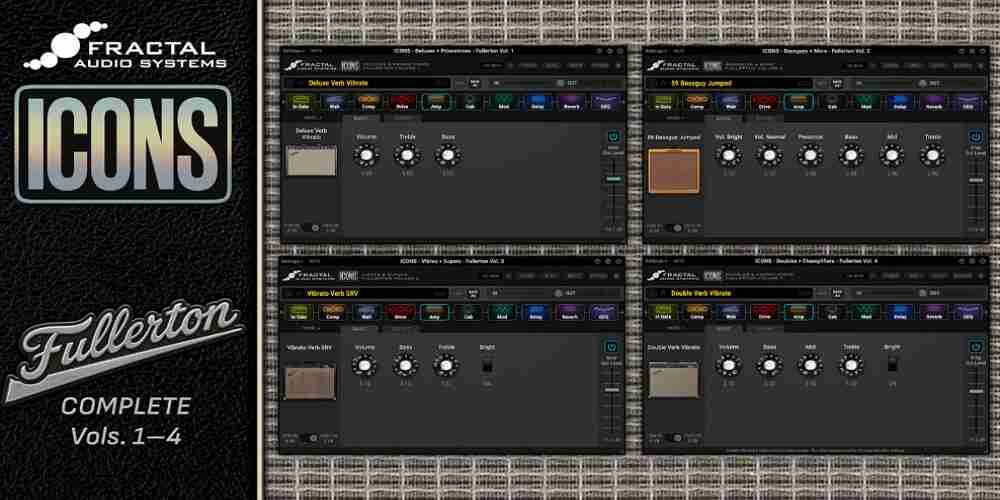
This is the biggest new arrival in the plugin space this year. Fractal Audio, makers of the $2,000+ Axe-Fx III hardware revered by touring professionals, finally brought their algorithms to software form with ICONS: Fullerton in February 2026. The debut volume covers 36 Fender-style amp models powered by Fractal’s Cygnus X-3 modeling engine, widely regarded as the most accurate circuit simulation available anywhere.
The DynaCab HD speaker simulation replaces traditional impulse responses with a dynamic model that reacts to your playing intensity — dig in harder and the speaker compression changes, just like a real cabinet. The amp models span the full Fender lineage from tweed Deluxes to blackface Twins, with every tone control, bias point, and tube interaction faithfully reproduced. For clean-to-breakup tones, nothing else currently available in plugin form comes close.
Why it beats the competition: The modeling technology is a genuine generation ahead of most competitors. Fractal spent years perfecting these algorithms in hardware that professionals trust on world tours. This is the first time that level of quality has been available at a $99 entry point.
Who should skip it: Metal and high-gain players. The Fullerton volume is Fender-only — Marshall, Vox, Mesa, and high-gain volumes are coming but have not launched yet. CPU and RAM usage runs higher than most competitors, so laptop users with older machines should test the trial version first.
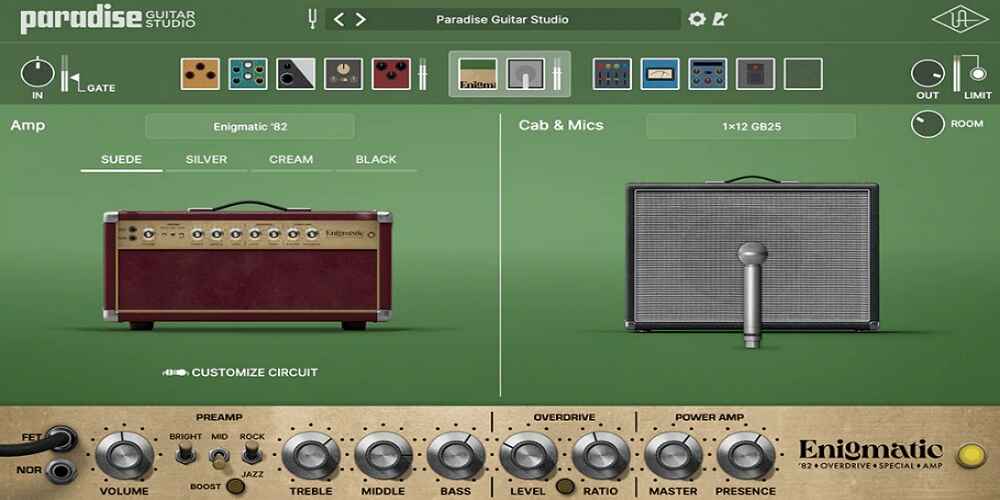
Universal Audio spent decades building their reputation on obsessively accurate analog emulations for professional studios, and Paradise Guitar Studio brings that same philosophy to guitarists. Launched in December 2025 at $199, it includes 11 tube amp models inspired by the holy trinity of Fender, Vox, and Marshall, plus a Dumble-style lead channel, 35 cab and microphone combinations, and built-in effects that include UA’s acclaimed 1176 compressor emulation.
The critical detail that separates Paradise from the competition: no proprietary hardware is required. Previous UA guitar plugins demanded an Apollo interface; Paradise runs natively on any modern Mac or Windows machine and is also included in UAD Spark subscriptions. The preset curation is exceptional — think EVH brown sound, Brian May-style harmonics, and Stevie Ray Vaughan’s modified Fender tones, all dialed in by UA’s in-house engineers with decades of studio recording experience.
Why it beats the competition: The tones clean up beautifully when you roll back your guitar’s volume knob, responding to pickup dynamics the way a real amp does. For blues, classic rock, and jazz players who live in the clean-to-light-crunch range, the feel is remarkably convincing.
Who should skip it: High-gain players. Paradise handles classic Marshall crunch well but does not venture into modern metal territory. There is also no standalone mode — you need a DAW to run it.
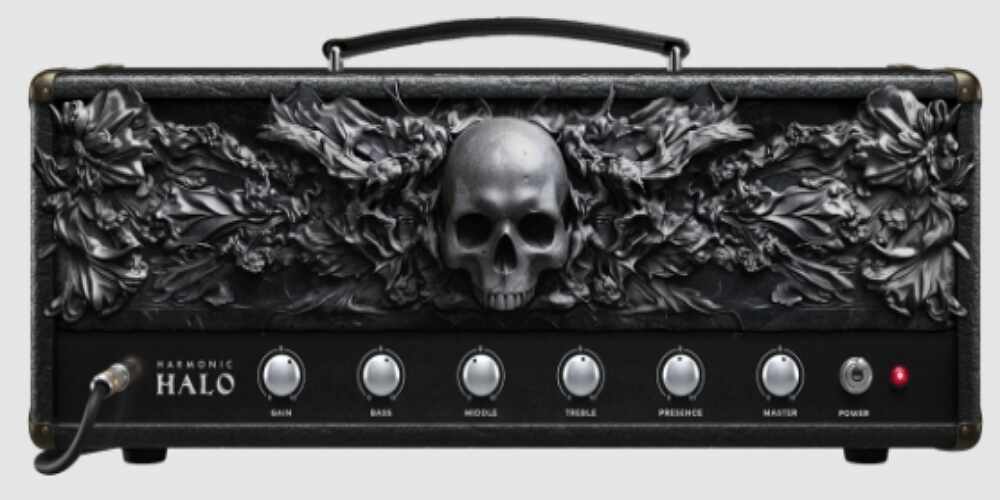
Positive Grid threw out the BIAS FX 2 codebase and rebuilt from scratch with BIAS X, released in September 2025 at $149. The headline feature is Text-to-Tone: describe a guitar sound in plain language and an AI engine builds the amp, cab, and effects chain to match. Tell it you want a “warm 70s California clean with tape echo and light chorus” and it assembles a rig in seconds. Music-to-Tone goes even further — upload a reference track and the AI analyzes the guitar tone, then recreates it.
Beyond the AI features, BIAS X is a legitimate improvement over its predecessor. The DSP engine was rebuilt for lower latency and higher realism, the preset library is vast and well-organized, and the Guitar Match feature emulates different pickup types so a bridge humbucker can approximate a single-coil neck sound. The interface is modern and intuitive, making it one of the fastest plugins to get usable tones from with zero experience.
Why it beats the competition: Accessibility. BIAS X is the easiest guitar amp plugin for beginners to get great tones from, and the AI features genuinely speed up the tone-hunting process even for experienced players. The price-to-feature ratio at $149 is strong, and Positive Grid runs frequent sales that push it well under $100.
Who should skip it: Purists who want transparent, component-level modeling without AI interpretation. The Text-to-Tone results are impressive but not always predictable, and some experienced players prefer the deliberate control of dialing in every parameter themselves.
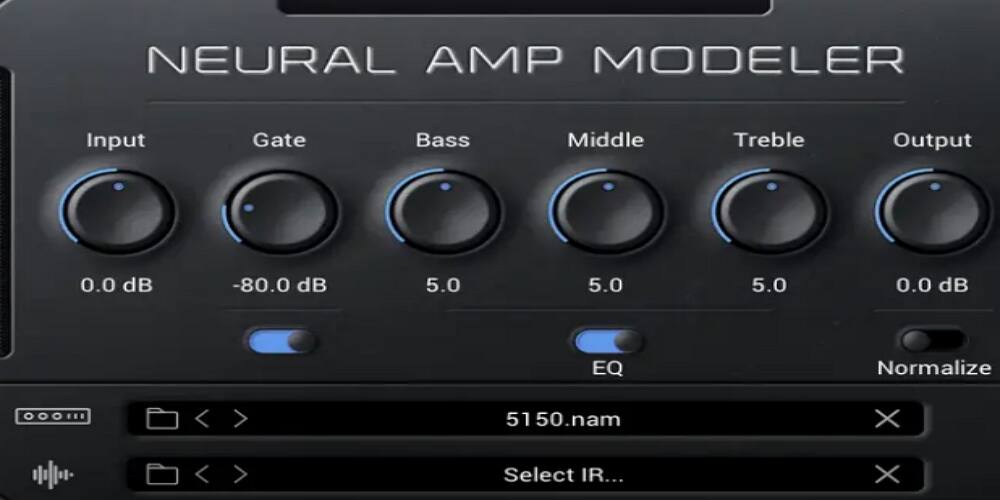
The most disruptive force in the amp sim world costs nothing. Neural Amp Modeler is a free, open-source project that uses deep learning to capture amplifiers with a claimed 99.6% accuracy. Independent testing by Nail The Mix found that NAM captures are roughly three times more accurate than Neural DSP’s own Neural Capture technology in the critical 100Hz to 10kHz range. That is not a misprint — a free tool is outperforming commercial products in raw fidelity.
The NAM ecosystem has exploded. TONE3000, the primary community library, hosts thousands of free captures spanning everything from vintage Fender tweeds to modern Diezel VH4s. The NAM Universal shell plugin by Wavemind Audio provides a polished interface for loading captures, and a major Architecture 2 (A2) update introduces Slimmable NAM — a single capture that dynamically scales CPU usage, running at full quality on powerful desktops and automatically reducing load for hardware pedals and older laptops.
Why it beats the competition: It is free, and the capture quality rivals or exceeds paid alternatives. For players on a tight budget, NAM combined with free impulse responses from ML Sound Lab or York Audio delivers genuinely professional-grade tones at zero cost.
Who should skip it: Anyone who wants an all-in-one experience. NAM is purely an amp capture loader — you need a separate IR loader, overdrive plugin, and effects chain to build a complete rig. Quality varies across community captures, so you will spend time auditioning to find the best ones. CPU usage with the highest-accuracy models can be demanding on older systems.
No competitor article walks readers through this, so here is a practical signal chain you can assemble today without spending a cent. This combination has been tested in actual recording sessions and produces results that hold up against plugins costing $200+.
Signal chain: Ignite Amps TSB-1 (free tube screamer) → Neural Amp Modeler with a TONE3000 community capture (free amp) → Pulse IR loader or NadIR (free cabinet simulation) with impulse responses from ML Sound Lab’s free pack. Add Valhalla Supermassive (free reverb) and TAL-Dub (free delay) for effects, and you have a complete recording chain.
Alternative for a simpler setup: Download Ignite Amps Emissary 2.0 (free dual-channel high-gain amp) and pair it with any free IR pack. Emissary handles everything from clean to crushing metal tones in a single plugin and requires no external IR loader. For an even simpler option, NaLex Amplex V5.0 offers 25+ amp models based on EVH, ENGL, Mesa, Marshall, and more — completely free with a built-in cab section.
One insight that experienced players know but most articles never mention: the cabinet impulse response accounts for roughly 90% of your perceived tone. The amp model primarily affects dynamics, compression, and harmonic character. This means spending $10 on a quality third-party IR pack will often transform a decent free amp sim into something that sounds better than a premium plugin with stock cabinets. Before upgrading your amp plugin, upgrade your impulse responses.
For modern metal and djent: Neural DSP Archetype: Gojira X is the consensus pick for mix-ready high-gain. On a budget, Ignite Amps Emissary paired with a tight IR pack gets remarkably close.
For classic rock, blues, and vintage tones: Fractal ICONS: Fullerton for Fender territory, UA Paradise Guitar Studio for the Fender/Vox/Marshall trifecta. Scuffham S-Gear at around $89 is the sleeper pick that studio players consistently rank above plugins costing twice as much for clean-to-medium-gain work.
For maximum flexibility on a budget: TONEX CS is free and gives you 40 tone models. The full TONEX MAX regularly drops below $100 during IK’s sales and effectively replaces an entire amp collection.
For the explorer and tone tweaker: Line 6 Helix Native gives you the deepest routing and the widest selection of amps and effects. BIAS X is the fastest path from idea to sound thanks to its AI engine.
Your audio interface matters more than your plugin for playability. Latency — the delay between picking a string and hearing the sound — is determined primarily by your interface’s driver quality and your buffer size setting, not the plugin itself. On Windows, use an ASIO driver (every major interface ships with one). On Mac, Core Audio handles this natively. Set your buffer to 128 or 64 samples for comfortable real-time playing. A Focusrite Scarlett at $100–$130 paired with any plugin on this list will deliver roundtrip latency under 10ms, which is imperceptible for most players.
Standalone mode versus DAW hosting: most plugins on this list offer a standalone application in addition to the DAW plugin. For practice and jamming, standalone mode typically runs at lower latency because it bypasses your DAW’s processing overhead. For recording, obviously, use the DAW version. If you play live through a laptop, consider a lightweight host like Apple MainStage ($30) or Gig Performer rather than loading a full DAW for dramatically better performance.
CPU efficiency varies wildly. From lightest to heaviest in our testing: Waves plugins and Blue Cat are extremely light; Nembrini Audio and Aurora DSP are light; Neural DSP and Softube are moderate; and AmpliTube with complex chains, NAM with hyper-accuracy models, and Fractal ICONS run on the heavier side. Laptop users should prioritize the trial versions before buying.
The guitar amp plugin landscape in 2026 is the strongest it has ever been, and the competition between approaches — traditional circuit modeling, AI-powered captures, and open-source neural networks — is pushing every developer to raise their game. The seven plugins in this guide cover every genre, budget tier, and skill level, from the zero-cost NAM ecosystem to Fractal’s flagship modeling technology.
If you can only pick one, start with your use case. Metal players will not regret Neural DSP Gojira X. Vintage tone chasers should look at Fractal ICONS or UA Paradise. Budget-conscious players should download TONEX CS and NAM today — free tools that produce professional results. And if you want one plugin that does everything, Helix Native remains the most comprehensive option available.
The best amp plugin is ultimately the one that makes you play longer. Every option on this list offers a free trial or free tier. Download two or three, plug in your guitar, and let your ears decide.